

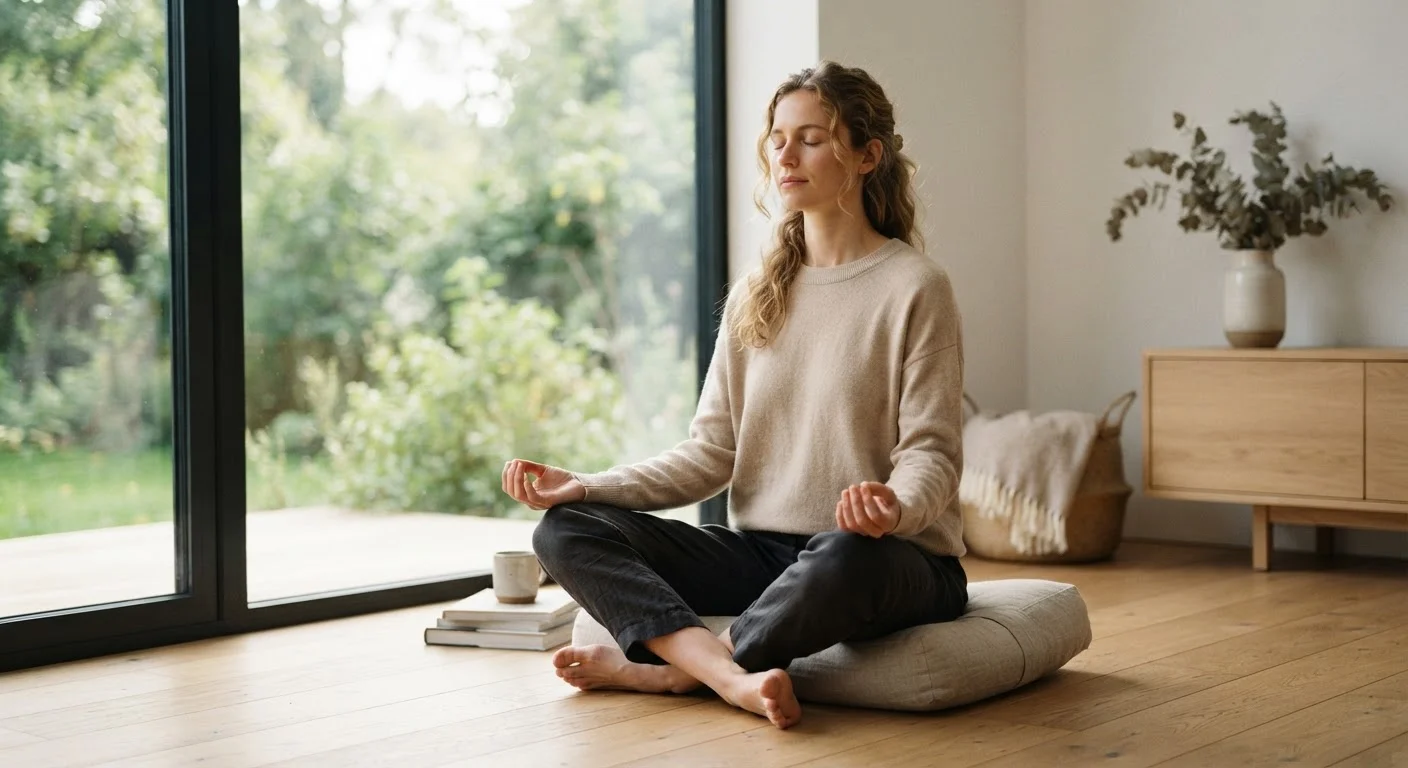
Option A
Mindfulness
The quality of awareness you can bring to any moment.
Best for: People who want to reduce stress and stay grounded throughout daily life without setting aside dedicated practice time.
Option B
Meditation
A structured practice for training the mind.
Best for: People ready to commit to a regular, time-set mental practice to build focus, calm, or self-awareness over time.
Two Terms, One Common Confusion
Ask ten people what mindfulness means, and several will say "meditation." Ask what meditation is, and some will say "being mindful." The two concepts are genuinely related - but treating them as interchangeable leads to fuzzy thinking about what you're actually trying to do for your mental wellbeing.
Here's the clearest way to hold the distinction: mindfulness is a quality of attention, while meditation is a practice. Mindfulness refers to the state of being aware of what's happening in the present moment - your thoughts, sensations, and surroundings - without judging or getting swept up in them. Meditation, in its many forms, is a deliberate mental exercise you do at a set time, often with a specific technique, to train the mind.
Think of it this way: a pianist practices scales (meditation) to develop musicality (mindfulness) that shows up when they perform. The practice and the quality it builds are related, but they're not the same thing. Just as understanding the difference between mobility and flexibility helps you train smarter, knowing what separates mindfulness from meditation helps you choose the right mental tool.
What Mindfulness Actually Means
Mindfulness as a concept has roots in Buddhist contemplative traditions but has been studied extensively in Western psychology since the 1970s and 1980s, largely through frameworks like Mindfulness-Based Stress Reduction (MBSR), developed at the University of Massachusetts Medical School.
In plain terms, mindfulness means noticing what's happening right now - internally and externally - with curiosity rather than reaction. You can be mindful while washing dishes, listening to a colleague, or sitting in traffic. The practice is informal: no timer, no cushion required.
What mindfulness is not is a passive state of relaxation or blanking out. It's an active, engaged form of attention. Research suggests that regularly directing attention this way - even informally - is associated with reduced stress reactivity and greater emotional regulation, though individual results vary considerably.
| Criterion | Mindfulness | Meditation |
|---|---|---|
| What it is | A quality of attention | A structured practice |
| When it happens | Any moment, ongoing | Designated time and setting |
| Technique required | No specific technique | Yes - varies by type |
| Typical setting | Anywhere, informal | Quiet space, often seated |
| Research base | Broad, across psychology | Broad, varies by technique |
| Learning curve | Low barrier to start | Moderate - consistency matters |
| Primary goal | Present-moment awareness | Training specific mental qualities |
What Meditation Actually Is
Meditation encompasses a wide range of structured mental practices. Common forms include:
- Focused attention meditation - directing attention to a single object, such as the breath, and returning to it when the mind wanders.
- Open monitoring meditation - observing thoughts and sensations as they arise without latching on to any of them.
- Loving-kindness (metta) meditation - cultivating feelings of warmth and goodwill toward oneself and others.
- Body scan practices - moving attention systematically through physical sensations in the body.
Each technique has a different emphasis, but all share the feature of being intentional and time-bound. Most people who meditate do so for a set period - often anywhere from five to forty minutes - in a relatively quiet environment.
Many forms of meditation are specifically designed to build mindfulness as their outcome. But some types of meditation - visualization practices or certain mantra-based approaches, for example - aren't primarily aimed at present-moment awareness at all.
Meditation Doesn't Always Mean Mindfulness
Not every meditation technique is designed to build present-moment awareness. Mantra-based practices and certain visualization methods have different aims and mechanisms. If mindfulness specifically is your goal, it's worth choosing a technique - like focused attention or open monitoring - that targets it directly. When in doubt, a qualified instructor or therapist familiar with contemplative practices can help you identify a good fit.
If you're looking to complement either approach with other reflective practices, structured journaling techniques can reinforce the same awareness skills in a different format.
Choosing What Works for You
Neither mindfulness nor meditation is universally superior - they serve overlapping but distinct purposes, and many people benefit from combining both. Informal mindfulness woven into daily routines can reduce chronic background stress without requiring schedule changes. Formal meditation practice, done consistently, may develop deeper attentional skills over time.
That said, context matters. People who find it hard to sit still or quiet the mind may find informal mindfulness a more accessible entry point. Others who prefer structure and clear goals tend to engage better with scheduled meditation sessions.
It's also worth noting that while research on both is broadly supportive for general wellbeing, neither is a clinical intervention. If you're experiencing significant anxiety, depression, or other mental health challenges, these tools can complement - but should not replace - professional support. Speaking with a licensed mental health professional is always the appropriate step for concerns beyond general wellness.
Understanding the difference between mindfulness and meditation is a bit like understanding the difference between solitude and loneliness: the terms feel similar on the surface, but the distinction meaningfully shapes how you approach your own wellbeing.
This article is for general informational purposes only and is not medical or mental health advice. If you have concerns about your mental health, please consult a qualified healthcare professional.
The content on this site is for informational purposes only and is not a substitute for professional advice. Always consult a qualified professional for guidance specific to your situation.