

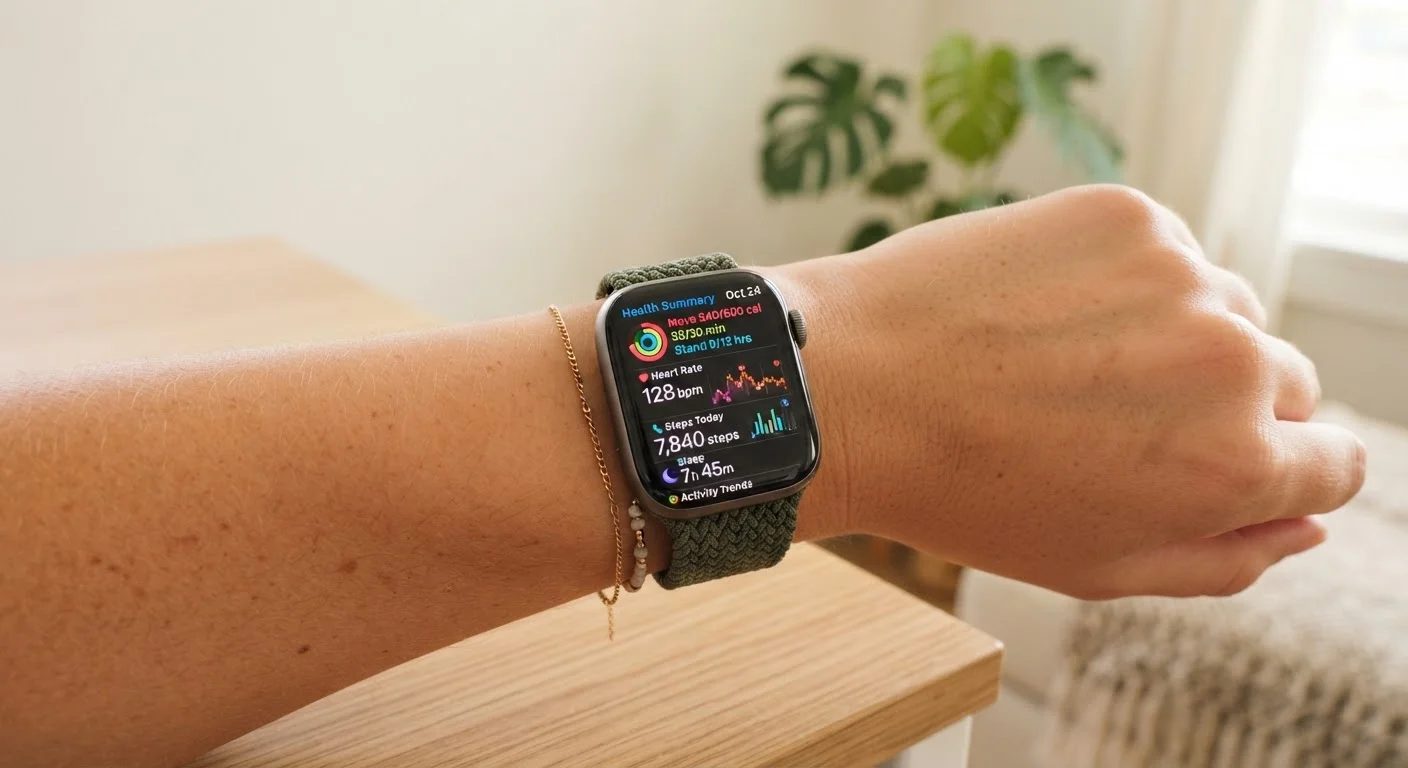
Why Fitness Tracker Numbers Can Feel Overwhelming
Fitness trackers promise insight into your body - but glancing at a dashboard crowded with rings, scores, and abbreviations can feel more confusing than empowering. The good news: you don't need to monitor every metric. A small handful of measurements give you a meaningful picture of how your body is responding to activity, rest, and everyday movement.
Understanding what these numbers actually represent - and what they can't tell you - helps you use your device as a useful tool rather than a source of anxiety. As a starting point, it helps to think of fitness tracker data the same way you'd approach reading a nutrition label: context matters far more than any single figure.
| Normal adult resting heart rate | 60-100 beats per minute (American Heart Association) |
| Most meaningful trend window | 4-8 weeks of consistent data (General exercise physiology guidance) |
| VO2 max estimate accuracy | Approximation only; not equivalent to lab testing (Consumer wearable research literature) |
| Sleep stage data type | Estimated, not clinically measured (Device manufacturer disclosures) |
| Heart rate zones (typical range) | 5 zones from light activity to maximum effort (General sports science convention) |
The Metrics That Actually Matter
Daily Steps
Step counts are the most familiar fitness metric, and for good reason - they're a simple proxy for overall daily movement. Research published by health organizations generally associates higher daily step counts with reduced risk of cardiovascular disease and all-cause mortality, though the relationship is not strictly linear. Rather than chasing a fixed target, focus on consistent upward trends over days and weeks. A plateau in step count after months of progress tells you something; a single low day tells you very little.
Resting Heart Rate (RHR)
Your resting heart rate - the number of times your heart beats per minute when you're at rest - is one of the most meaningful long-term indicators on your tracker. For most adults, an RHR between 60 and 100 beats per minute is considered within a normal range, though athletes often register lower. A gradual downward trend in RHR over months of consistent aerobic exercise is a reliable sign of improving cardiovascular fitness. A sudden unexplained spike can signal stress, illness, or poor sleep - useful early information, though not a diagnosis.
Heart Rate Zones
Many devices divide exercise intensity into zones - typically labeled from light (Zone 1) to maximum effort (Zone 5). Time spent in each zone helps you understand whether your workouts are building aerobic base, improving endurance, or pushing anaerobic capacity. If you're new to exercise, spending most of your time in moderate zones (Zones 2-3) supports sustainable fitness gains. For a deeper look at high-intensity training and what zone data means in that context, see what HIIT training actually involves.
Sleep Score and Sleep Stages
Most modern trackers estimate time spent in light, deep, and REM sleep. These estimates are based on movement and heart rate patterns and are approximations - not clinical measurements. Rather than treating a sleep score as a grade, look for patterns: consistently fragmented sleep, frequent nighttime heart rate elevations, or rarely reaching deeper sleep stages are worth discussing with a healthcare provider.
VO2 Max (Estimated)
VO2 max is a measure of how efficiently your body uses oxygen during intense exercise. Tracker estimates use heart rate data to approximate this figure - they're not as precise as lab testing, but they can reflect meaningful change over time. A gradually increasing VO2 max estimate generally tracks with improving aerobic fitness. Don't compare your number to others; compare it to your own history.
Resting Heart Rate (RHR)
The number of heartbeats per minute when your body is at complete rest. It is commonly measured first thing in the morning and serves as a baseline indicator of cardiovascular health.
VO2 Max
A measure of the maximum volume of oxygen your body can use during intense exercise. Higher values generally indicate better aerobic fitness. Consumer trackers estimate this figure using heart rate data rather than direct measurement.
Heart Rate Zones
Categories of exercise intensity based on what percentage of your estimated maximum heart rate you're working at. Each zone corresponds to different physiological adaptations and training benefits.
REM Sleep
Rapid Eye Movement sleep is a recurring sleep stage associated with dreaming, memory consolidation, and emotional processing. Fitness trackers estimate REM periods using movement and heart rate data.
Aerobic Base
The foundation of cardiovascular endurance built through sustained moderate-intensity exercise. A strong aerobic base improves overall fitness and supports recovery from more intense efforts.
What Fitness Trackers Can't Tell You
Fitness tracker data is self-referential - it tells you about your own trends, not absolute health status. Optical heart rate sensors can be less accurate during high-intensity movement or when the device fits loosely. Sleep stage data varies considerably by device and algorithm. And no consumer tracker can diagnose a health condition.
Think of your tracker the way you'd approach any data tool: useful for spotting patterns and staying motivated, but not a substitute for professional evaluation. If metrics concern you - persistent high resting heart rate, severely disrupted sleep, or unusual readings during normal activity - bring that information to a qualified healthcare professional rather than self-diagnosing.
Just as common fitness myths can mislead beginners, over-reliance on tracker numbers can distort how you approach your health. The goal is informed awareness, not obsession with optimization.
This article is for general informational purposes only and does not constitute medical advice. Consult a qualified healthcare professional regarding any health concerns or before making changes to your exercise or wellness routine.
The content on this site is for informational purposes only and is not a substitute for professional advice. Always consult a qualified professional for guidance specific to your situation.