

What a Credit Report Actually Is
A credit report is a factual record of how you've managed borrowed money over time. Three major credit bureaus - Equifax, Experian, and TransUnion - compile this information from lenders, creditors, and public sources. The report itself doesn't include your credit score; that number is calculated separately using the report's data. If you're new to the concept, our starter's overview of credit and banking covers the foundations.
Federal law entitles consumers to free reports from each bureau annually through AnnualCreditReport.com. Reviewing your report regularly lets you catch errors, spot potential fraud, and understand what lenders see when they evaluate you.
| Major U.S. Credit Bureaus | 3 (Equifax, Experian, TransUnion) |
| Free Annual Reports Allowed | 1 per bureau per year (via AnnualCreditReport.com) (Fair Credit Reporting Act (FCRA)) |
| How Long Most Negative Items Stay | Up to 7 years (Fair Credit Reporting Act (FCRA)) |
| How Long Chapter 7 Bankruptcy Stays | Up to 10 years (Fair Credit Reporting Act (FCRA)) |
| Hard Inquiry Visibility Period | Up to 2 years |
| Bureau Dispute Investigation Window | 30 days (Fair Credit Reporting Act (FCRA)) |
The Five Core Sections
1. Personal Information
This section identifies who you are - name, date of birth, current and previous addresses, employers on file, and Social Security number (partially masked). It's populated from data lenders submit when you open accounts. Variations in how your name was entered across different creditors can create multiple entries; that's normal and not a red flag.
2. Account History (Trade Lines)
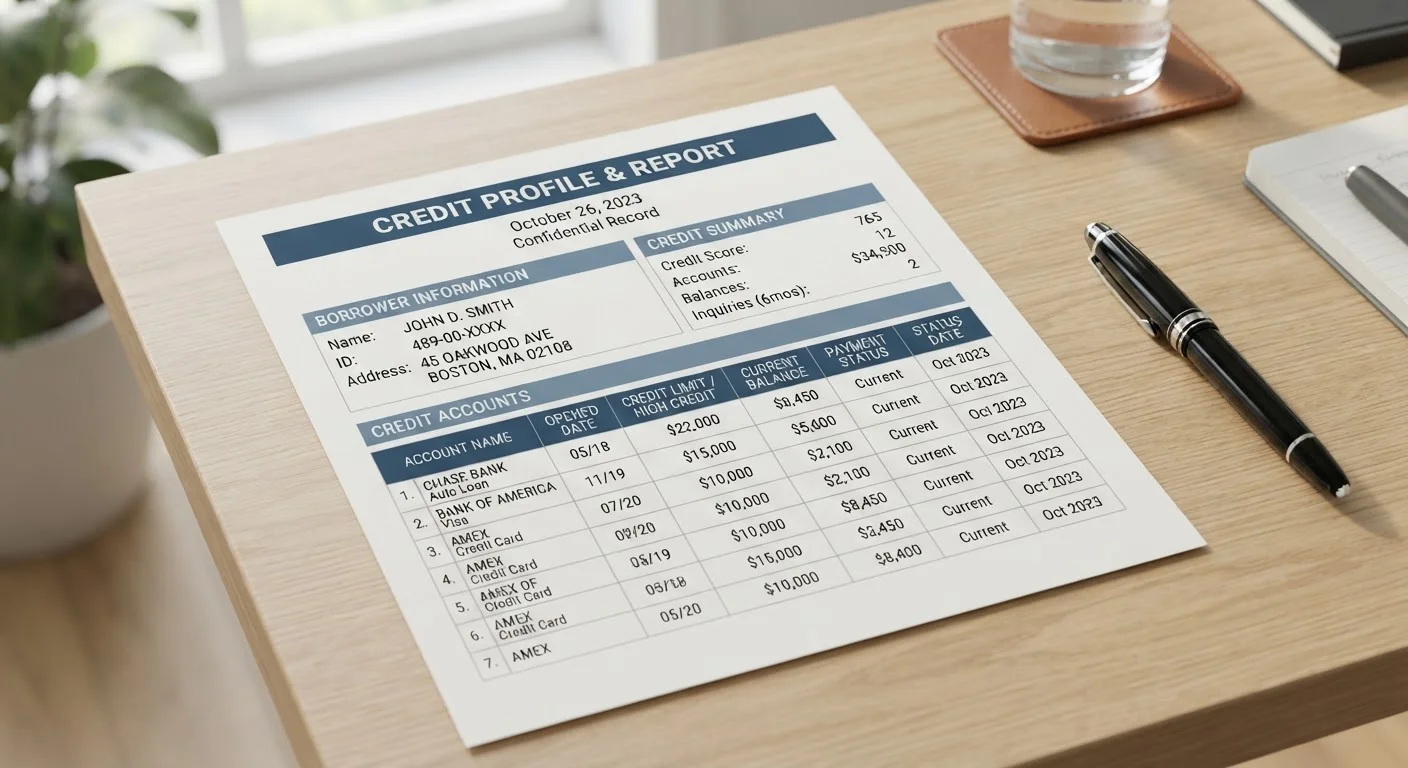
This is the largest section and the one lenders examine most closely. Every credit account - credit cards, mortgages, auto loans, student loans, personal loans - appears here as a trade line. Each trade line includes the creditor's name, account type, date opened, credit limit or original loan amount, current balance, monthly payment history, and account status (open, closed, current, or delinquent). Payment history reported here is the single biggest driver of your credit score, which we break down further in our article on how credit scores are calculated.
3. Inquiries
Every time a lender pulls your report, an inquiry is recorded. Hard inquiries happen when you apply for credit and can modestly lower your score for a period. Soft inquiries - from pre-approval screenings or your own checks - don't affect scoring. Hard inquiries typically remain visible for two years. To understand exactly what shifts when you apply for new credit, see our piece on applying for a new card.
4. Public Records
Historically this section included bankruptcies, civil judgments, and tax liens. As of a 2017 update to bureau reporting standards, most tax liens and civil judgments were removed. Today, bankruptcies are the primary public record that appears. A Chapter 7 bankruptcy can remain on your report for up to ten years; a Chapter 13 for up to seven.
5. Collections
When an account goes unpaid and a creditor sells or transfers the debt to a collection agency, a separate collections entry appears. The original delinquent account may also remain in the account history section. Collections entries can remain for up to seven years from the date the account first became delinquent.
Trade Line
A record of a single credit account on your credit report, submitted by a lender. It includes account type, balance, payment history, and status.
Hard Inquiry
A pull of your credit report triggered when you apply for new credit. Hard inquiries are visible to other lenders and can modestly lower your credit score for a limited period.
Soft Inquiry
A credit report check that does not result from a credit application - such as a pre-approval screening or a check you initiate yourself. Soft inquiries do not affect your credit score.
Derogatory Mark
Negative information on a credit report, such as a late payment, collection account, or bankruptcy. Most derogatory marks remain on file for seven years.
Collections Entry
An account record that appears when an unpaid debt is transferred to a collection agency. It is separate from the original account entry and can remain for up to seven years.
Credit Bureau
An organization that collects and maintains consumer credit information from lenders and other sources. The three major U.S. bureaus are Equifax, Experian, and TransUnion.
How to Use Your Report Strategically
Once you understand each section, the report shifts from an intimidating document to a workable checklist. Look for accounts you don't recognize (possible fraud or error), verify that closed accounts show a zero balance, and confirm your personal information is accurate. Dispute any errors directly with the bureau in writing - they are legally required to investigate within 30 days.
Your credit report also matters well beyond credit card applications. Lenders use it to set terms on mortgages, and as our auto-lending explainer details, it directly influences the interest rate on vehicle financing. Staying familiar with your report is one of the more concrete habits that puts everyday financial decisions on firmer footing.
This article is for general informational purposes only and does not constitute financial or legal advice. Consult a qualified financial professional for guidance specific to your situation.
The content on this site is for informational purposes only and is not a substitute for professional advice. Always consult a qualified professional for guidance specific to your situation.