

What a Bank Statement Actually Contains
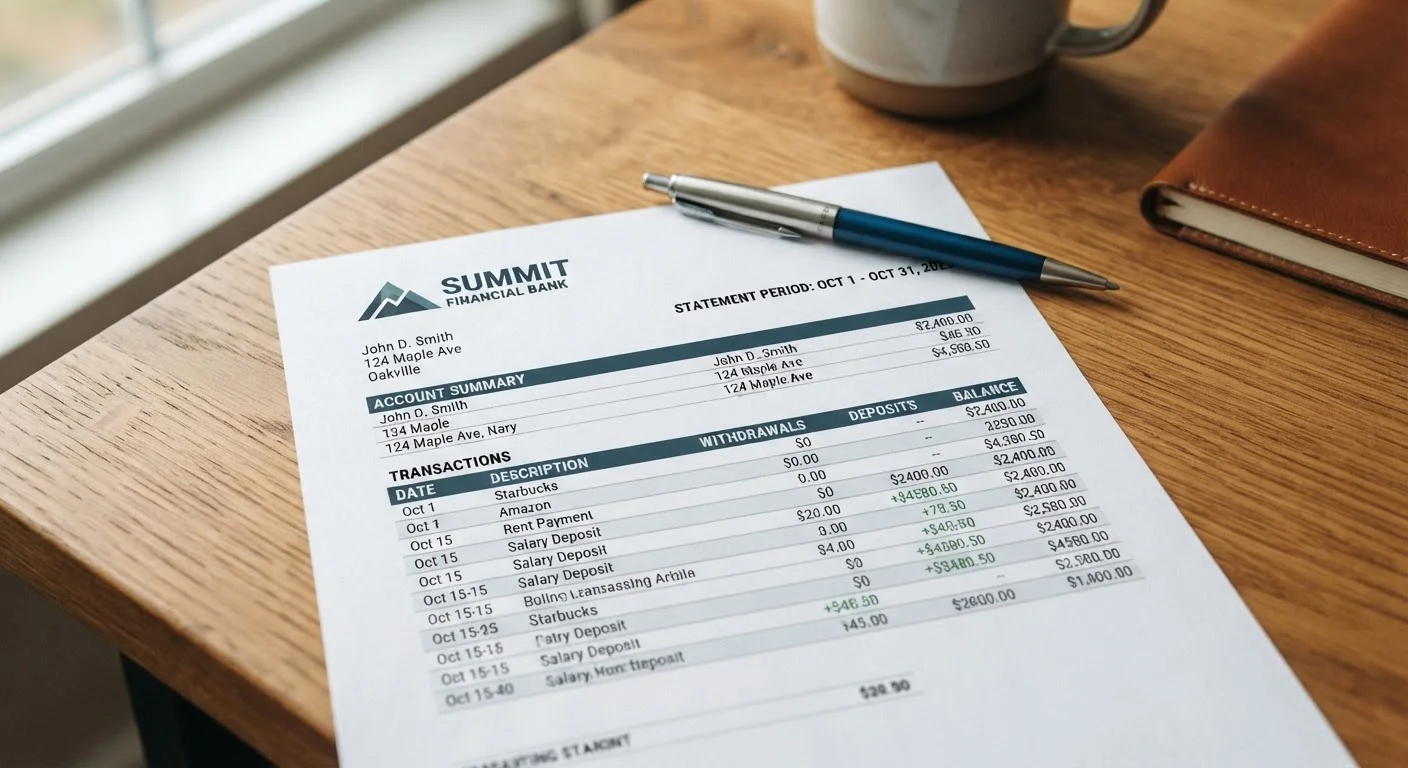
A bank statement is a month-by-month record of every dollar that moved through your account - deposits, withdrawals, transfers, fees, and interest. Most people scan it briefly or ignore it entirely, but the statement is genuinely one of the most information-dense documents your bank sends you.
At the top, you'll find your account summary: the opening balance, total credits (money coming in), total debits (money going out), and the closing balance. Below that is the transaction ledger - every line item, usually listed chronologically. Each entry shows a date, a transaction description, and the amount. The description is where things get interesting, and often confusing.
Many transaction descriptions are truncated, coded, or use merchant processing names that don't match the brand you recognize. A streaming service charge might appear as a corporate parent's name. A restaurant might show up as a generic payment processor. This is one reason automatic bill-pay and subscription charges so often go unnoticed - they don't always look like what they are.
Set a Regular Statement Review Date
Treat bank statement review like a monthly bill - schedule it for the same day each month, such as the first weekend after your statement closes. Consistency turns it into a habit rather than a chore. Even 20 focused minutes each month can catch problems before they become expensive.
Most banks also list any fees charged during the period - overdraft fees, monthly maintenance fees, out-of-network ATM fees - either within the transaction ledger or in a separate fee summary section. If yours doesn't make fees obvious at a glance, it's worth knowing where to look. Our guide to common banking fees explains which charges are most frequent and what triggers each one.
How to Read Your Statement Step by Step
What you will need
Locate your full statement - not just your balance
Log into your bank's online portal or app and navigate to the statements section. Download or open the most recent monthly statement as a complete PDF rather than relying on the transaction feed in the app, which may not include all fee details or display items the same way. If you receive paper statements, pull the most recent envelope before proceeding.
Verify your opening and closing balances
Check that the opening balance on this month's statement matches the closing balance from last month's statement. A discrepancy here - rare but possible - could indicate a bank error or a statement you missed. Confirming continuity also gives you a sanity check before you dig into the details.
Review every line item - not just large transactions
Go through each transaction in the ledger one by one. For any item you don't immediately recognize, search the merchant name online before assuming it's fraudulent - many legitimate businesses process payments under a parent company's name. Mark anything you cannot identify after a quick search with a question mark for follow-up.
Identify and total all fees
Look for any line items labeled as fees - monthly maintenance, overdraft, ATM, wire transfer, or paper statement fees. Add them up. Even fees that seem individually small can represent a meaningful annual cost. If a fee appears that you didn't expect or don't understand, note the exact name and amount so you can call your bank for an explanation or dispute.
Flag recurring charges and verify each one
Scan for charges that appear monthly at a consistent amount. List every recurring item you find and confirm whether it's a service you actively use and intend to keep. Cancel or pause anything that doesn't make that cut. Even two or three forgotten subscriptions can add up to several hundred dollars annually.
Dispute errors and unauthorized charges promptly
If you identify a charge you believe is fraudulent or a billing error, contact your bank immediately. Under the Electronic Fund Transfer Act, consumers generally have 60 days from the statement date to dispute unauthorized transactions - delays can reduce or eliminate your protection. Use your bank's official dispute process (not a third-party service) and document everything in writing.
Patterns and Red Flags Worth Investigating
Once you've done a line-by-line review, step back and look at the bigger picture. Your statement is also a behavioral record - it shows where your money habitually goes, which can be uncomfortable but useful.
Look for subscription creep: small, recurring charges for services you may have signed up for and forgotten. These often start as free trials. A $9.99 monthly charge that's been running for two years is nearly $240 - often for something you no longer use. Subscription creep and idle fees are among the quietest forces eroding savings over time.
Look for duplicate charges: the same merchant, same amount, appearing twice in a short window. These can be merchant errors rather than fraud, but they still require action on your part - banks won't automatically catch them for you.
Look for small unauthorized amounts: fraudsters often test stolen card details with micro-transactions of $1 or less before attempting larger withdrawals. These are easy to miss if you're only checking your balance.
Dispute Windows Are Shorter Than You Think
Federal consumer protections under the Electronic Fund Transfer Act give you a limited window to dispute unauthorized electronic transactions - typically 60 days from the statement date. After that window closes, your ability to recover lost funds may be significantly reduced or eliminated entirely. Monthly review isn't just good practice; it's how you stay within the timeframe where protections apply.
Finally, compare your closing balance to your own expectations. If the numbers don't align with what you thought you had, that gap is worth understanding - not ignoring. Once you have a clear picture of where money is going, you may find you're ready to put some of it to work automatically. Automating savings can reinforce the habits that bank-statement reviews help you build - though it has its own limitations worth understanding.
This article is for general informational and educational purposes only and does not constitute personalized financial advice. For guidance specific to your situation, consult a licensed financial professional.
The content on this site is for informational purposes only and is not a substitute for professional advice. Always consult a qualified professional for guidance specific to your situation.