

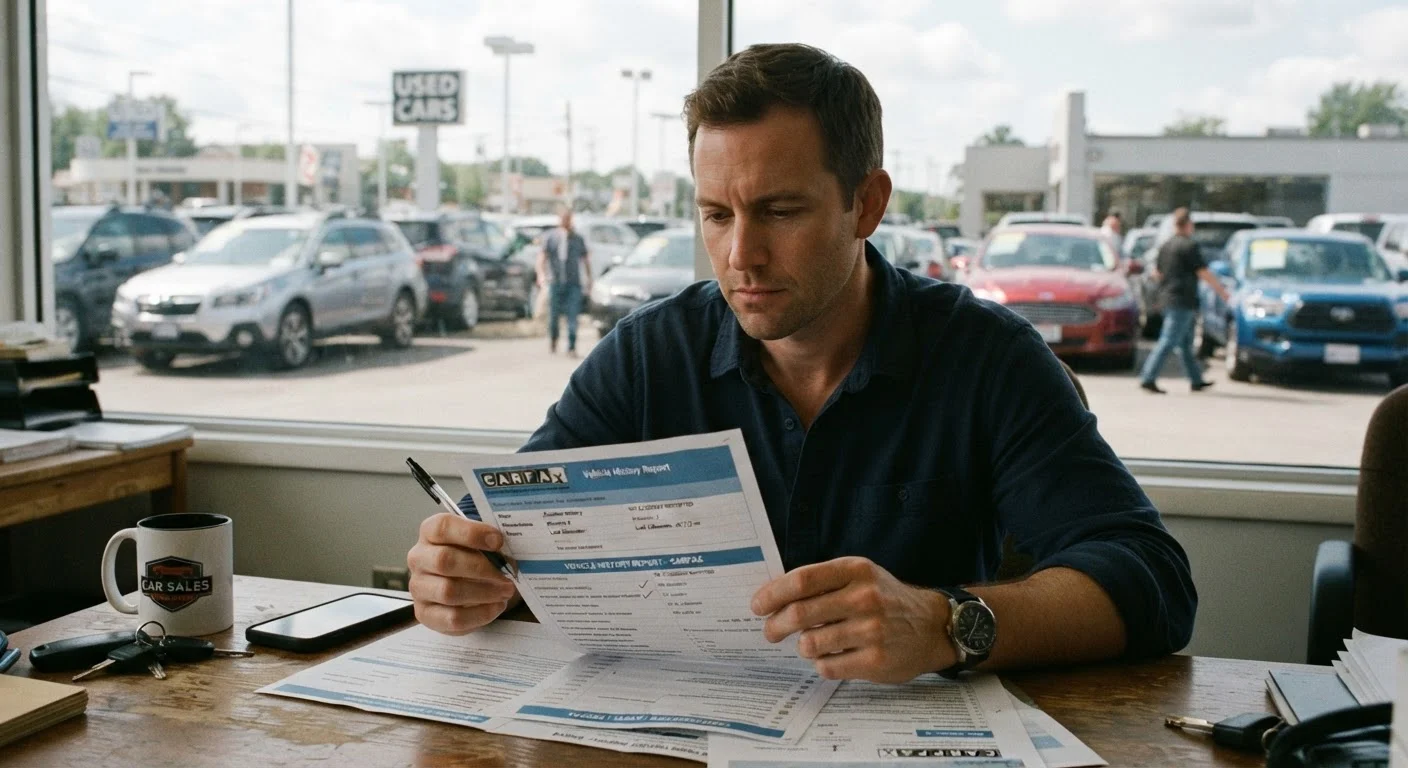
What a Vehicle History Report Actually Is
A vehicle history report is a compiled record of documented events tied to a specific vehicle, identified by its 17-character VIN. Services that produce these reports gather data from state DMV offices, insurance companies, salvage yards, auto auctions, dealers, and sometimes independent repair shops. Because no single agency tracks everything, the report is only as complete as the data sources feeding it.
That caveat matters: a report showing no accidents doesn't prove a car was never in one - it means no accident involving that vehicle was reported to a source the service monitors. Cash repairs after a minor fender-bender, for instance, may never appear anywhere. Keep this limitation in mind as you read, and treat the report as one tool among several, not the final word. Pairing the report with questions to the seller is always worthwhile - see what to ask before a test drive for a practical starting checklist.
The Five Sections That Matter Most
Most vehicle history reports are organized into predictable categories. Here's what each one tells you - and what to watch for.
1. Title History
This is the most important section. It shows every title ever issued for the vehicle and flags any branded titles. Key brands to know:
- Salvage: An insurer declared the vehicle a total loss. Even after repair, some states restrict how such vehicles can be titled, insured, or resold.
- Flood/Water damage: Corrosion and electrical problems from water intrusion can surface years later.
- Lemon law buyback: A manufacturer repurchased the vehicle due to a defect that couldn't be fixed within a set number of attempts.
- Rebuilt or reconstructed: A previously salvaged vehicle that passed a state inspection after repair - but history still warrants extra scrutiny.
Multiple state titles in the report can be routine (the car moved with its owner), or it can signal title washing - the practice of re-titling a branded vehicle in a state with less stringent disclosure rules to clear its record.
2. Odometer Readings
Each time a vehicle is registered, inspected, or sold at auction, the mileage is often recorded. Look at the readings chronologically. Mileage should climb in a consistent direction. A reading that drops - or a gap of years with no reading followed by a sudden high number - is a red flag worth investigating directly with the seller. Odometer fraud is a federal crime, but it still occurs, particularly with older vehicles that may have had mechanical analog odometers.
3. Accident and Damage Records
This section logs incidents reported to insurance companies or recorded at repair facilities. Pay attention to the type of damage noted: airbag deployment, structural/frame damage, or fire damage are significantly more serious than a cosmetic bumper scuff. A history of structural damage doesn't automatically disqualify a vehicle, but it does mean you need a qualified mechanic to inspect the repair quality before purchase. Understanding how ongoing maintenance compares to a new purchase is covered in our car maintenance guide.
4. Ownership History
This section shows how many owners the vehicle has had and, sometimes, whether it was used as a rental, fleet, or lease vehicle. High owner turnover in a short time period can indicate recurring problems. Rental and fleet use isn't inherently bad - those vehicles are often serviced on schedule - but it does mean higher average mileage and more variable driving conditions.
5. Service and Inspection Records
Some reports include entries from dealerships or reporting shops showing routine maintenance, recall work, or emissions inspections. Consistent service records are a positive signal. Sparse records don't mean the car wasn't maintained - many independent shops don't report to data aggregators - but they give you less to work with. A well-documented service history is worth its weight; see how a maintenance log protects buyers and sellers alike for context on why sellers with good records are easier to trust.
Open Recalls Are Worth a Separate Check
Vehicle history reports don't always include open safety recalls. Use the free VIN lookup at nhtsa.gov to check for any outstanding recall notices before you finalize a purchase. Recall repairs are generally completed at no cost at an authorized dealership, but an uncompleted recall may affect safety and resale.
After You've Read the Report: Next Steps
A vehicle history report narrows your risk - it doesn't eliminate it. If the report is clear of major flags, schedule a pre-purchase inspection with an independent, licensed mechanic before signing anything. If the report shows a branded title or structural damage, factor repair costs and potential resale limitations into your decision.
Also check whether any open recalls are attached to the VIN. The National Highway Traffic Safety Administration maintains a free recall lookup tool at nhtsa.gov using the vehicle's VIN. Recall work is typically completed at no cost to the owner, but uncompleted recalls can indicate deferred maintenance habits worth noting.
Finally, consider how the vehicle's history might affect your auto insurance options. Rebuilt-title vehicles, in particular, can be more difficult or expensive to insure, and some carriers won't cover them for comprehensive or collision. Confirming insurability before purchase is a practical step that's easy to overlook.
This article provides general information for educational purposes and is not a substitute for professional mechanical inspection or legal advice specific to your situation.
The content on this site is for informational purposes only and is not a substitute for professional advice. Always consult a qualified professional for guidance specific to your situation.