

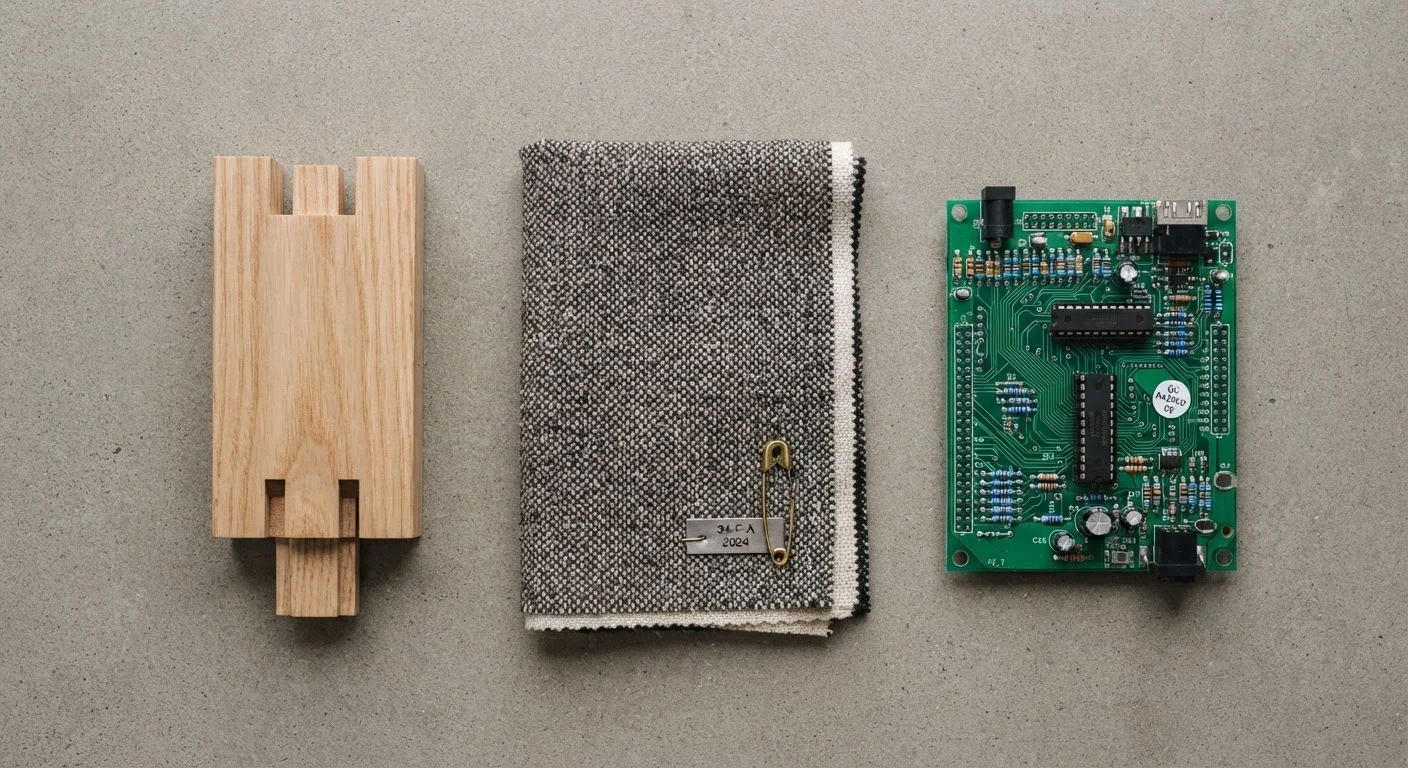
Why Some Quality Signals Translate Everywhere
Shopping well across wildly different product categories - a sofa, a winter coat, a laptop - might seem to require entirely separate expertise. In practice, a handful of quality signals hold up regardless of what you're evaluating. Learning to read them gives you a transferable skill set that works whether you're in a furniture showroom, scrolling through apparel listings, or comparing electronics specs.
These signals aren't foolproof, and price alone is a notoriously weak proxy for quality. What follows are the cross-category indicators that consistently separate durable, well-made goods from products that underdeliver. For a broader starting point, see our guide to evaluating product quality as a consumer.
Material Disclosure and Specificity
A manufacturer willing to name exactly what a product is made from is showing a kind of confidence that vague descriptions don't. "Solid white oak" means something different from "wood-tone finish." "90% merino wool" is verifiable; "premium fabric" is not. "Aluminum alloy chassis" tells you about heat dissipation and durability in a way "metal body" does not.
Specificity matters because named materials can be fact-checked, compared, and held to known performance standards. When listings are vague or switch between general and specific language inconsistently, that's worth noticing. Legitimate quality usually comes with something to say about it.
Named, specific materials can be verified; vague descriptions usually can't.
Construction Details You Can Observe
Quality at the assembly level is often visible if you know where to look. In furniture, examine joinery: dovetail or mortise-and-tenon joints indicate craftsmanship; staples or dowels alone in load-bearing areas suggest corners were cut. In apparel, turn a garment inside out - reinforced seams, bar tacks at stress points, and consistent stitch density are signs of deliberate construction. In electronics, look for even gaps between panels, firm button actuation, and connectors that seat without play.
These details rarely make it into marketing copy, which is precisely why they're useful. They reflect decisions made at the manufacturing level, not the advertising level.
Construction details reflect manufacturing decisions that marketing copy rarely mentions.
Credible Third-Party Certifications
Independent certifications from recognized bodies carry genuine informational weight because they represent testing that the manufacturer didn't control. For electronics, listings from recognized safety testing organizations signal that a product has passed standardized electrical and safety evaluations. For apparel, certifications that test for harmful substances in textiles address a real consumer concern. For furniture, certifications covering composite wood emissions or sustainable forestry practices reflect independently verified claims.
The key word is "credible" - certifications vary widely in rigor and oversight. Our companion article on what product certifications actually mean breaks down which ones are backed by genuine third-party testing and which are largely self-administered.
Certifications are only as useful as the independence and rigor of the body issuing them.
Warranty Terms as a Confidence Indicator
Warranty length and scope reveal something about how a manufacturer views their own product's durability. A company confident in its construction tends to offer longer coverage and clearer terms. A limited warranty with a long list of exclusions - or one that covers "defects" so narrowly that almost nothing qualifies - is less useful than it appears.
Look specifically at what is covered (parts, labor, or both), what voids the warranty, and whether the process for making a claim is reasonable. A generous, clearly written warranty isn't a guarantee of quality, but a stingy or opaque one is a legitimate flag worth factoring in.
Clear, generous warranty terms suggest a manufacturer is confident in their own product.
Consistency in Verified Owner Feedback
Aggregate review scores are easy to game. What's harder to fake is the internal consistency of detailed owner accounts over time. Look for patterns in verified-purchase reviews: do multiple owners independently mention the same specific failure point? Do long-term owners report that the product held up as expected? Are complaints about durability clustered around a particular production period or batch?
This kind of pattern-reading - across platforms and over time - gives you a more grounded picture than any single score. It works the same way for a sectional sofa, a down jacket, or a wireless router.
Patterns in verified, detailed owner accounts reveal durability issues that ratings alone obscure.
Brand Reputation Verified, Not Assumed
Brand recognition is a reasonable starting point for research, but it requires active verification rather than passive trust. A company with a long track record in a category has usually accumulated documented performance data - whether from independent product testing organizations, trade publications, or sustained owner feedback. That documentation is what makes reputation meaningful.
Brand name alone, particularly in categories where licensing and outsourced manufacturing are common, can be misleading. Our article on how much weight brand reputation should carry examines this tension directly and offers a practical way to weigh it alongside harder evidence.
Reputation earns its weight through documented track records, not name recognition alone.
Putting It All Together
No single signal tells the whole story. The most useful approach is to stack several of these indicators - materials, construction, certification, warranty, and reputation - and look for consistency. A product that scores well across multiple dimensions is far more likely to deliver lasting value than one that excels on just one front.
When you're shopping without being able to handle the product in person, these signals become even more critical. Our article on applying quality evaluation skills when shopping online walks through how to extract useful quality information from specs, imagery, and documentation. And if you want a structured method for applying these principles systematically, the practical framework for assessing quality across product categories is a natural next step.
Stack Multiple Signals for Stronger Confidence
Evaluate at least three of these signals before making a significant purchase. A product with specific material disclosure, visible construction quality, and a credible third-party certification is on much firmer ground than one with only a recognizable brand name and a high average review score. No single indicator is definitive, but agreement across several is a strong indicator of genuine quality.
The content on this site is for informational purposes only and is not a substitute for professional advice. Always consult a qualified professional for guidance specific to your situation.