

The Federal Foundation: FTC Act and Key Consumer Statutes
Most consumer protection in the United States is built on a handful of federal laws that set a nationwide floor - states can add protections on top, but cannot go below these minimums.
The Federal Trade Commission Act (FTC Act) prohibits unfair or deceptive acts and practices in commerce. In practice, this means a seller cannot make false claims about a product, hide material fees, or use high-pressure tactics that a reasonable person would find coercive. The FTC enforces this law and can seek refunds for consumers harmed by violations.
The Fair Credit Billing Act (FCBA) gives you the right to dispute charges on open-end credit accounts - including credit cards - within 60 days of the billing statement date. If a charge is unauthorized or reflects goods you never received, the card issuer must investigate and cannot collect the disputed amount while doing so.
The Truth in Lending Act (TILA) requires lenders to clearly disclose the annual percentage rate (APR), total cost of credit, and other key terms before you sign a loan or credit agreement. This matters most when financing a large purchase such as a vehicle or appliance. For more on pre-purchase contract review, see this pre-purchase checklist.
Warranty Rights: The Magnuson-Moss Warranty Act
Passed in 1975, the Magnuson-Moss Warranty Act governs written warranties on consumer products sold in the United States. It does not require sellers to offer a warranty, but if they do, the law controls what that warranty must disclose.
FTC Act
The Federal Trade Commission Act prohibits unfair or deceptive acts and practices in U.S. commerce. It is the primary federal law the FTC uses to pursue businesses that mislead or harm consumers.
Magnuson-Moss Warranty Act
A federal law governing written warranties on consumer products. It requires clear labeling of warranty terms as "full" or "limited" and sets minimum standards for what warranted products must deliver.
Lemon Law
State laws that provide remedies - typically a replacement or refund - for consumers who purchase a vehicle with a serious defect that cannot be repaired after a reasonable number of attempts.
UDAP Statute
Unfair and Deceptive Acts and Practices statutes are state-level consumer protection laws that often mirror the FTC Act. Many allow individuals to sue directly and recover attorney's fees.
Fair Credit Billing Act (FCBA)
A federal law that gives consumers the right to dispute billing errors or unauthorized charges on open-end credit accounts, requiring the card issuer to investigate before collecting the disputed amount.
Truth in Lending Act (TILA)
A federal law requiring lenders to clearly disclose the cost of credit - including the APR and total repayment amount - before a consumer signs a loan or financing agreement.
Key protections under Magnuson-Moss include:
- Full vs. limited labeling: Any written warranty on a product costing more than $15 must be labeled either "full" or "limited." A full warranty requires the warrantor to repair or replace a defective product within a reasonable time at no charge. A limited warranty may impose conditions, so the label itself signals important differences in coverage.
- No tying prohibited: Warrantors generally cannot require consumers to use specific brand-name replacement parts or services as a condition of keeping a warranty valid - unless those parts are provided free of charge.
- Pre-sale availability: Retailers must make warranty terms available to you before you buy, not just after.
Understanding what a warranty actually covers in practice can save significant frustration. Warranty terms most shoppers skip are a common source of post-purchase disputes.
State-Level Protections: Lemon Laws and Unfair Trade Practice Acts
Every state has its own consumer protection statute - often called a "Little FTC Act" - that mirrors or expands on federal standards. Many allow consumers to sue directly and recover attorney's fees, which makes enforcement more practical for individuals.
Lemon laws are among the most well-known state-level protections. They generally apply to new vehicles that have a substantial defect that the manufacturer cannot repair within a reasonable number of attempts or within a set timeframe. Remedies typically include a replacement vehicle or a refund. Coverage varies significantly by state - some include used vehicles or other consumer goods, while others are limited strictly to new cars. For a detailed breakdown, see what lemon laws actually cover, and for broader vehicle purchase context, the buying a car hub provides useful background.
State Unfair and Deceptive Acts and Practices (UDAP) statutes go further than federal law in many cases, covering areas like bait-and-switch advertising, hidden fees, and false testimonials. Some states allow for statutory damages - a fixed dollar amount per violation - even without proof of actual financial harm.
Consumer protections extend beyond shopping, too. Renters face a parallel set of rights; renter's rights that tenants often overlook cover many of the same enforcement principles.
How to Actually Use These Protections
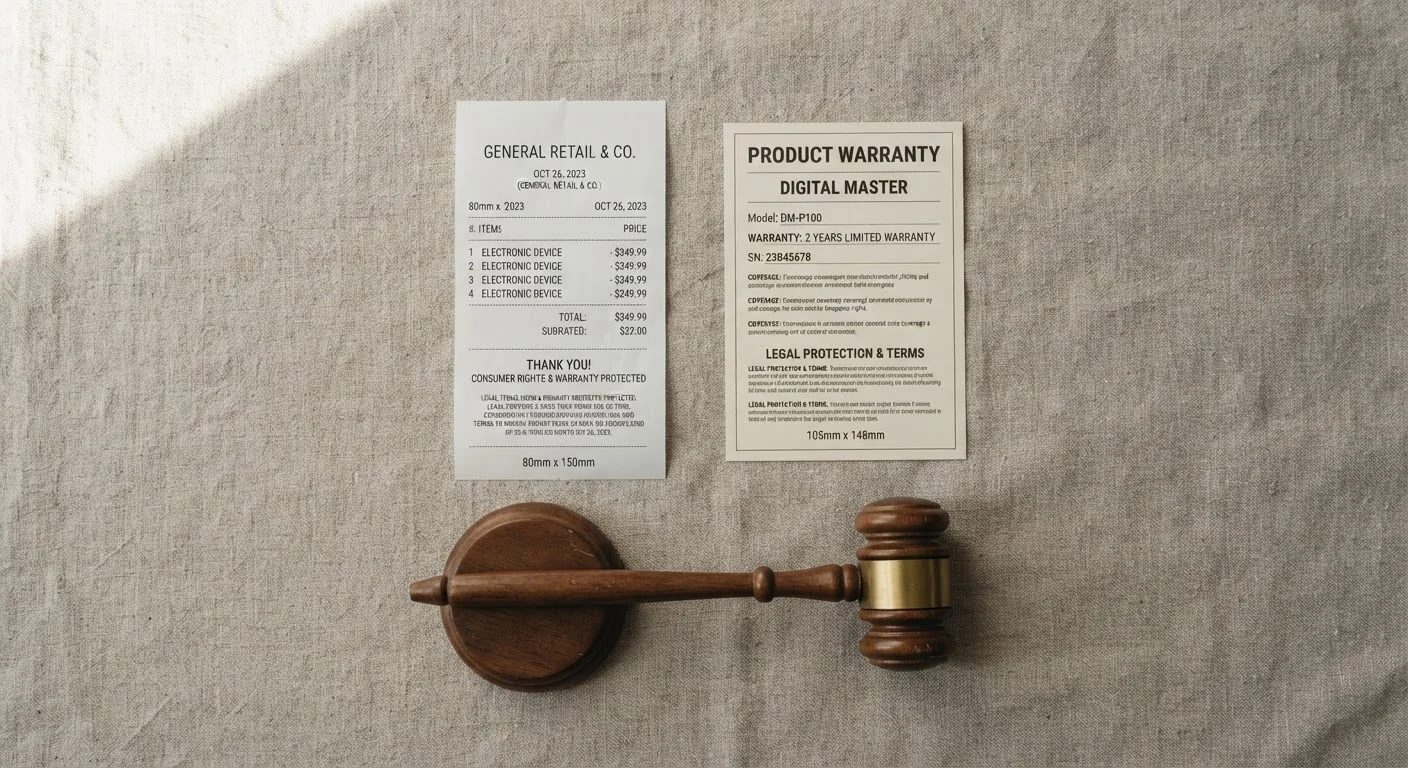
Knowing these laws exist is only half the equation. Enforcing your rights generally requires documentation: keep receipts, written correspondence, warranty cards, and records of repair attempts. Most dispute processes - whether with a credit card issuer, a state attorney general, or a small claims court - rely heavily on paper trails.
Document Everything Before You Dispute
Consumer protection laws give you rights, but exercising them depends almost entirely on your records. Save receipts, screenshots of product listings, email confirmations, and notes from phone calls (including dates and representative names). Agencies and courts rely on documentation when evaluating your claim, and gaps in your records can undermine an otherwise valid dispute.
Filing a complaint with the FTC at ReportFraud.ftc.gov or with your state attorney general's consumer protection office is often a productive first step. These agencies track complaint patterns and can escalate issues that affect many consumers, even when individual damages are small.
For warranty and lemon law disputes specifically, many states offer free or low-cost arbitration programs as an alternative to litigation. Check your state attorney general's website for programs available in your area.
The content on this site is for informational purposes only and is not a substitute for professional advice. Always consult a qualified professional for guidance specific to your situation.