

Our Verdict
Neither urban apartments nor suburban rentals hold a universal advantage. The right fit depends on your commute tolerance, space needs, transportation habits, and the lifestyle rhythms that matter most to you. Running a full cost comparison - including transportation and utilities - gives a clearer picture than rent alone.
| Best for | Recommended |
|---|---|
| Renters who prioritize walkability, transit, and nightlife access | Urban Apartments |
| Those who need more square footage, outdoor space, or quieter surroundings | Suburban Rentals |
| Renters with long or flexible remote-work schedules | Suburban Rentals |
| People who prefer car-free or low-car living | Urban Apartments |
Understanding the Core Differences
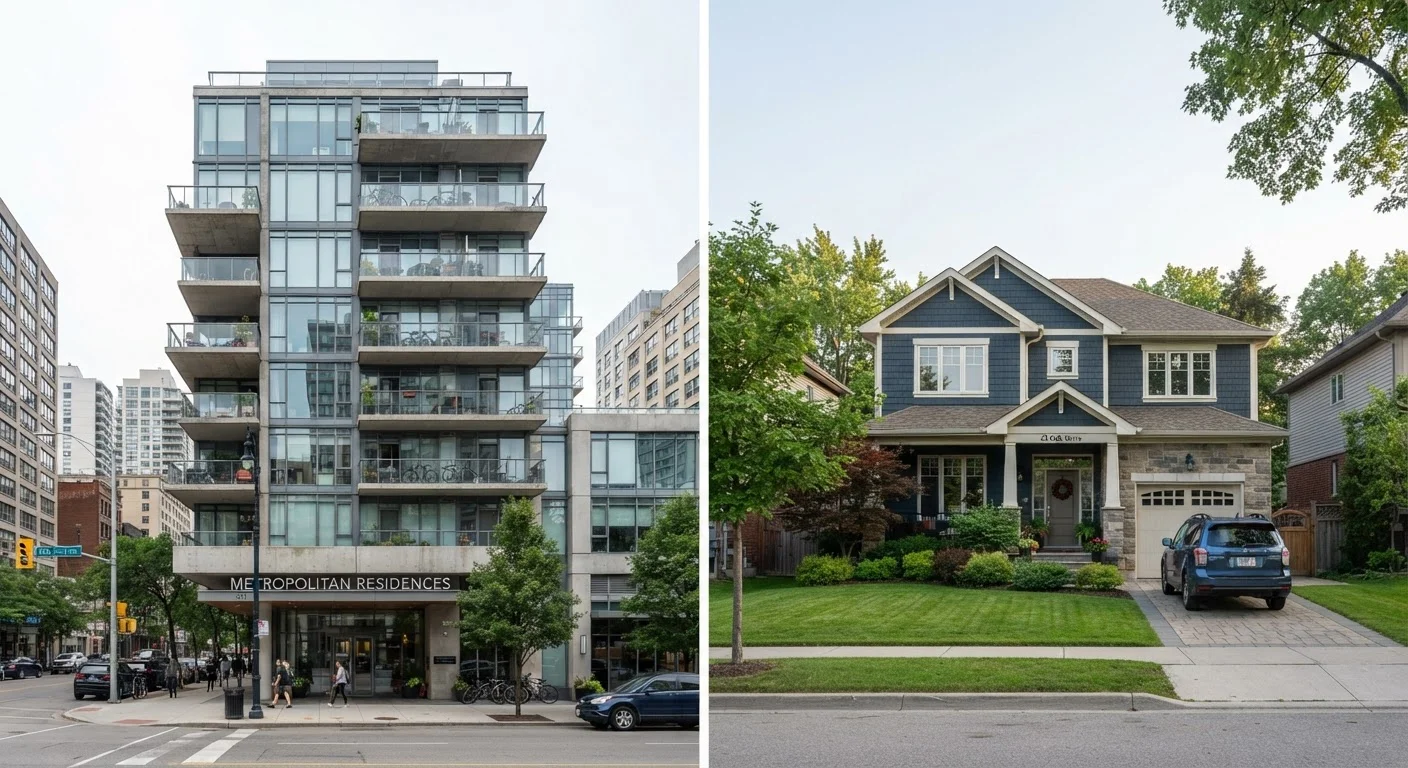
When renters compare urban apartments to suburban rentals, they're really comparing two distinct ways of living - not just two price points. Urban rentals cluster in dense city cores where walkability, transit, and proximity to employment hubs are primary draws. Suburban rentals, by contrast, tend to sit in lower-density neighborhoods where space, quiet, and proximity to schools and parks take precedence.
These differences ripple into nearly every aspect of the rental experience: what you pay, how you commute, what amenities are nearby, and even how much your day-to-day errands cost. Understanding the full picture, rather than anchoring on the monthly rent figure alone, helps renters make decisions that hold up over the length of a lease. For a broader look at the renting decision overall, see our complete rental journey guide.
| Urban Apartments | Suburban Rentals | |
|---|---|---|
| Average Rent per Sq. Ft. | Higher - premium for location | Lower - more space for the dollar |
| Unit Size | Typically smaller | Generally larger |
| Outdoor Space | Rare; shared or none | Often includes yard or patio |
| Commute Options | Transit, walking, cycling | Primarily car-dependent |
| Transportation Costs | Often lower without a car | Higher; car usually required |
| Walkability & Errands | High - amenities nearby | Low - driving required for most |
| Noise & Density | Higher noise, more neighbors | Quieter, more privacy |
| Typical Lease Structure | Often standardized | More variable by landlord |
Cost: More Than Just Monthly Rent
Urban apartments typically carry higher monthly rents - often significantly so in major metros - but that figure doesn't tell the whole story. Urban renters frequently save on transportation. Without a car or with minimal driving, expenses like car payments, insurance, fuel, and parking disappear or shrink dramatically. The American Public Transportation Association has noted that households using public transit can save thousands annually compared to those relying on a personal vehicle.
Suburban renters, meanwhile, may pay lower base rents but usually absorb higher transportation costs. A single-car household in the suburbs can spend considerably more each month than the rent savings suggest. Utilities also vary: older suburban homes may have higher heating and cooling bills due to more square footage, while modern urban high-rises sometimes bundle utilities into rent.
$10,000+
Annual savings possible without a car
The American Public Transportation Association estimates that transit-dependent households can save over $10,000 annually compared to car-owning households.
30%
Income guideline for housing costs
Housing experts commonly reference spending no more than 30% of gross income on rent and housing-related costs as a general affordability benchmark.
It's also worth noting that suburban rental markets can be tighter than they appear. Demand for single-family rentals has grown in many metropolitan peripheries, pushing suburban rents upward in competitive regions. Always research local vacancy rates before assuming suburban means affordable.
Space, Amenities, and Daily Convenience
Suburban rentals typically offer more interior square footage and, often, access to private outdoor space - a yard, patio, or garage - that most urban apartments simply cannot match. For households with children, pets, or a need for a home office, that extra room can be decisive.
Urban apartments compensate with proximity. Grocery stores, restaurants, healthcare providers, gyms, and entertainment are frequently within walking distance or a short transit ride. Building amenities - rooftop decks, fitness centers, package lockers, doorman services - are common in newer urban complexes, though they're typically factored into higher rents.
Suburban renters usually depend on driving for most errands, which is a meaningful lifestyle commitment. If a car purchase would be required specifically to support a suburban rental, that upfront and ongoing cost deserves a prominent place in any budget calculation. Understanding the full cost of vehicle ownership is a useful exercise before locking in a suburban lease.
Common Pitfalls to Avoid
Renters in both markets make predictable mistakes. Urban renters sometimes underestimate noise, limited storage, and the impact of small unit sizes on long-term comfort. Suburban renters can be caught off guard by longer commutes than anticipated, sparse public transit, and isolation if they don't own a vehicle.
Lease terms also differ across rental settings. Urban apartments - especially in managed complexes - often follow more standardized lease agreements. Suburban rentals, particularly those owned by individual landlords, may have more variable terms around maintenance responsibilities, pet policies, and lease renewal. Always read the full lease document carefully and ask direct questions before signing. Our guide to questions worth asking a landlord covers what to probe before you commit.
Finally, renters shouldn't treat this choice as permanent. Urban-to-suburban and suburban-to-urban moves are common as households grow, change jobs, or shift priorities. If you're also weighing whether renting is the right move at all, our renting vs. buying comparison lays out both sides of that decision clearly.
The content on this site is for informational purposes only and is not a substitute for professional advice. Always consult a qualified professional for guidance specific to your situation.