

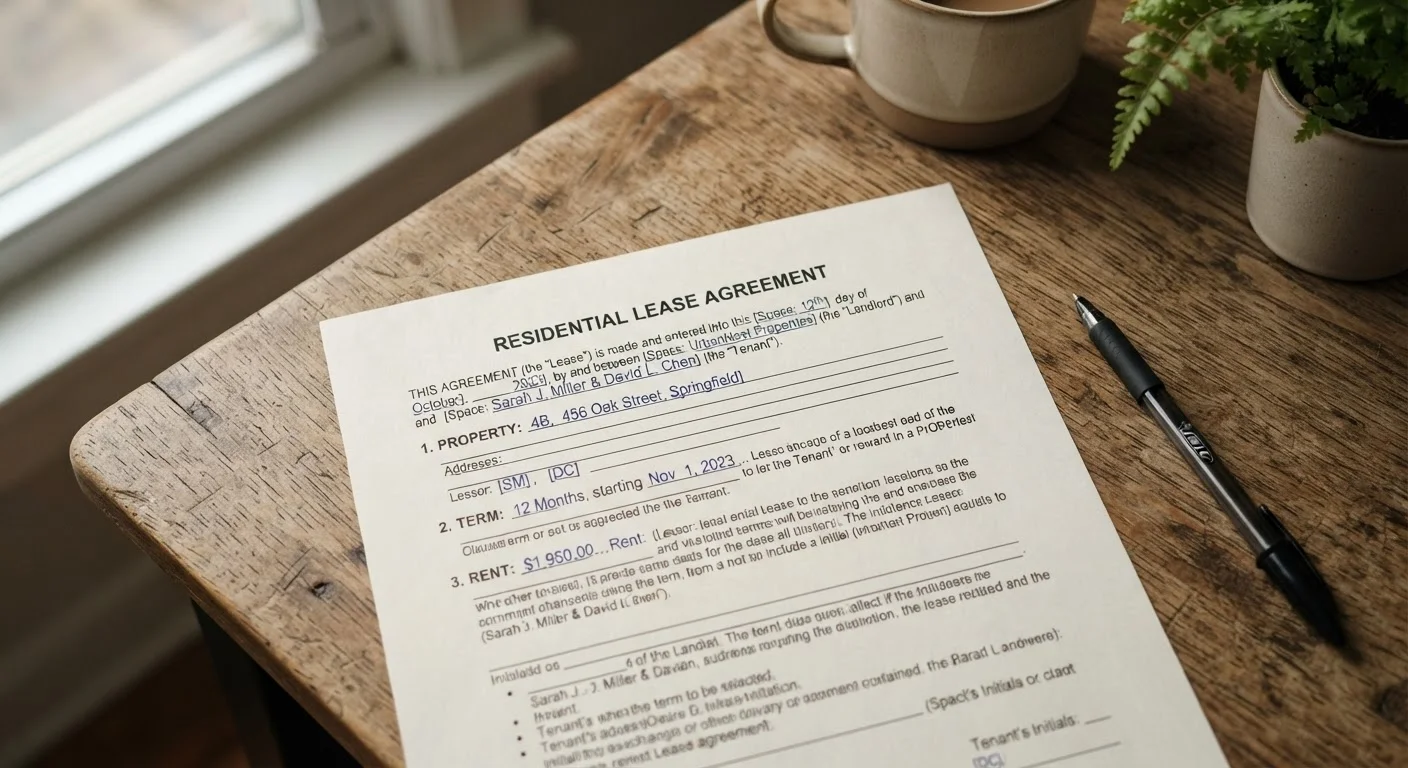
Why Lease Language Catches Renters Off Guard
Signing an apartment lease feels like a formality - the exciting part is getting the keys. But that document governs your legal and financial relationship with your landlord for the entire tenancy, and some of its clauses carry consequences that don't become obvious until you're already in a difficult situation.
The problem isn't usually that leases are intentionally deceptive. It's that they're dense, written in legal language, and reviewed quickly under the pressure of a competitive rental market. Renters who have already toured the unit, paid the application fee, and mentally moved in are unlikely to slow down and scrutinize every paragraph. Before your next signing, it's worth understanding which specific clauses most commonly cause problems - and why.
For a broader look at what the law generally guarantees you as a tenant regardless of what your lease says, see Renter's Rights 101: Protections Most Tenants Don't Know They Have.
The Lease Clauses Most Likely to Cost You
The following mistakes represent the lease-related errors renters most commonly make - and the ones with the most significant financial and legal consequences.
Ignoring the early termination clause until you actually need to leave.
Why it happens: Renters focus on move-in costs and monthly rent, assuming the exit terms won't affect them unless something goes seriously wrong.
Missing the auto-renewal window and getting locked into another lease term.
Why it happens: Auto-renewal clauses - which automatically extend the lease unless the tenant gives written notice by a specific deadline - are often buried in the final pages of the agreement.
Assuming subletting or having a long-term guest is informally acceptable.
Why it happens: Many renters treat subletting and extended guest stays as private arrangements that landlords won't notice or care about.
Overlooking rent escalation clauses that allow mid-lease or renewal increases.
Why it happens: Renters see the advertised monthly rent and assume it's fixed for the full lease term without reading the fine print.
Not documenting unit condition at move-in, leaving yourself exposed to disputed security deposit deductions.
Why it happens: Renters are often excited and rushed at move-in, skipping a thorough walkthrough or assuming the landlord's checklist is sufficient.
Assuming lease terms are non-negotiable and signing without asking questions.
Why it happens: Renters often treat a printed lease as a final, take-it-or-leave-it document, particularly in competitive rental markets.
Read Every Addendum - Not Just the Main Lease
Many of the most consequential lease terms - including pet fees, parking rules, utility billing methods, and move-out procedures - appear in attached addenda rather than the main document. These addenda are legally binding. Before signing, request all attachments, read them completely, and ask for clarification on any language you don't fully understand.
Knowing where to look is half the battle. Before signing any lease, use a structured walkthrough like the one in Before You Sign the Lease: A Room-by-Room Apartment Checklist to evaluate both the physical condition of the unit and the specific terms being offered. Many renters are also surprised to learn that common assumptions about leases - such as verbal agreements being enforceable - don't hold up legally. Things Renters Believe About Leases That Simply Aren't True addresses several of these misconceptions directly.
Verbal Assurances Don't Override Written Lease Terms
If a landlord verbally promises something that contradicts what's in the lease - such as waiving a fee or allowing a pet - that promise is unlikely to hold up if a dispute arises. Get any agreed-upon exceptions or modifications in writing as a signed addendum before you move in. A handshake agreement offers little protection once your name is on the lease.
This article provides general educational information about residential leases and is not legal advice. Lease terms and tenant protections vary significantly by state and locality. If you have questions about a specific lease or a dispute with a landlord, consult a licensed attorney or qualified housing counselor in your area.
The content on this site is for informational purposes only and is not a substitute for professional advice. Always consult a qualified professional for guidance specific to your situation.