

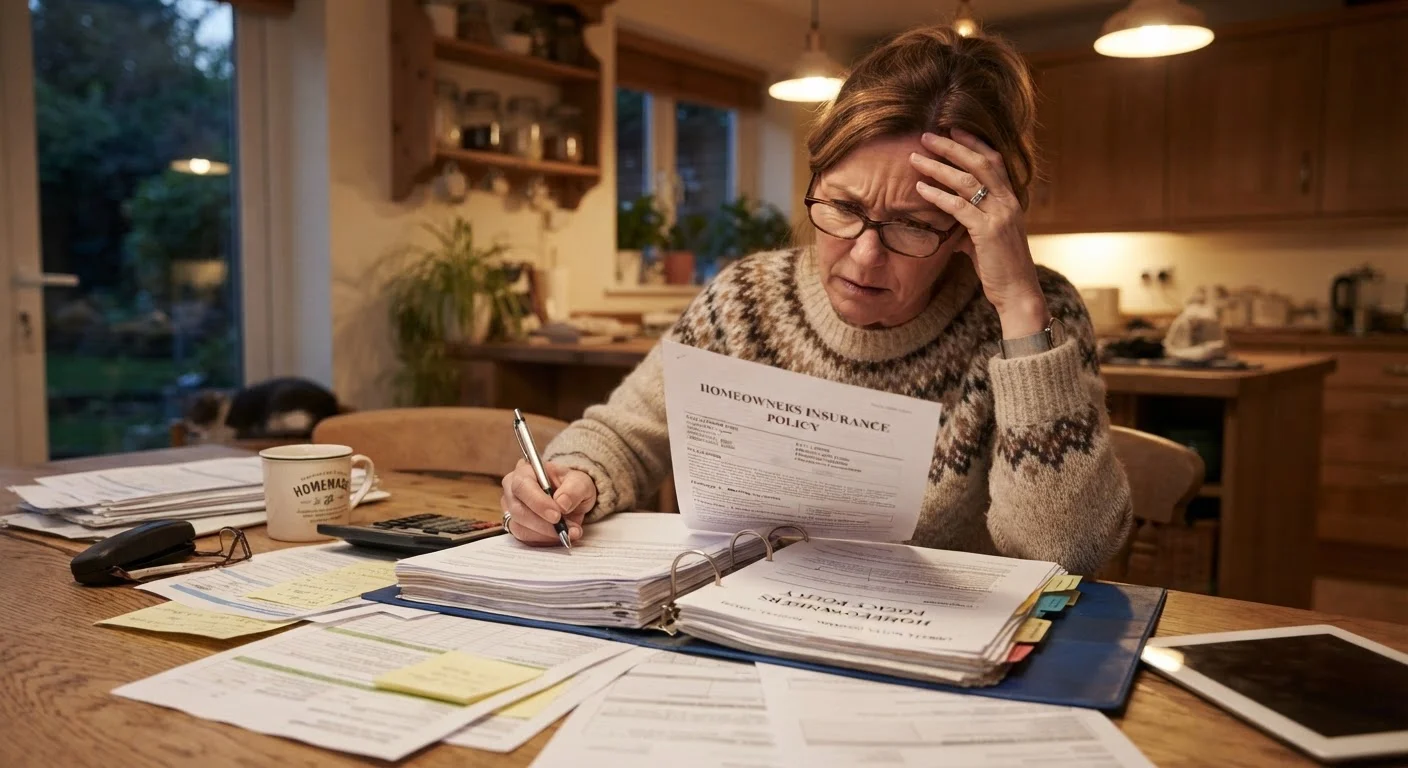
Why Coverage Gaps Are So Common
Most homeowners purchase a policy at closing and revisit it only when a bill arrives. That passive approach works fine - until something goes wrong. Standard homeowners insurance is designed to cover a broad range of scenarios, but it was never designed to cover everything. Insurers manage their risk by excluding specific perils, capping payouts on certain property types, and imposing conditions that aren't obvious from a summary page.
The result is a policy that feels comprehensive until it isn't. Understanding which gaps exist - and why - is the most practical thing a homeowner can do short of filing a claim. Just as renters insurance carries its own set of exclusions, homeowners policies have blind spots that follow predictable patterns. Recognizing those patterns allows you to have a more informed conversation with your agent and make deliberate choices about what additional coverage, if any, makes sense for your situation.
Flood Damage Is Almost Never Covered
This is one of the most financially devastating surprises in residential insurance. Standard homeowners policies written under private carriers and through the National Flood Insurance Program (NFIP) are separate products. If your home floods due to heavy rain, storm surge, or rising groundwater, your standard homeowners policy will not pay for repairs or replacement of belongings. Flood coverage must be purchased independently, and there is typically a 30-day waiting period before a new flood policy takes effect.
The Most Consequential Coverage Gaps
The mistakes below represent the exclusions and misunderstandings that generate the largest financial surprises for homeowners. Each one is common, each one is avoidable, and each one tends to surface at the worst possible time - after a loss has already occurred.
Assuming flood damage is covered under a standard policy.
Why it happens: The word 'water' appears throughout homeowners policies in the context of covered pipe bursts or appliance leaks, so homeowners often conflate water coverage with flood coverage.
Overlooking earthquake exclusions in seismically active regions.
Why it happens: Earthquakes feel unlikely until they happen, and agents do not always proactively discuss seismic risk during policy enrollment.
Underinsuring high-value personal property such as jewelry, art, or collectibles.
Why it happens: Standard policies include sublimits - internal caps - on categories like jewelry and electronics that are far below the actual replacement value of those items.
Failing to add coverage for home-based business equipment or liability.
Why it happens: Remote work and home-based businesses have expanded rapidly, but most homeowners policies were designed around residential use and exclude business property and professional liability.
Ignoring sewer backup and water damage exclusions.
Why it happens: Homeowners assume that because some water damage is covered, all water damage is covered. Sewer backups and drain overflows are typically excluded as a separate category.
Not updating coverage after significant home improvements.
Why it happens: After a kitchen remodel or addition, homeowners rarely circle back to their insurer to adjust the dwelling coverage limit - meaning the policy may reflect the home's pre-renovation value.
Your Policy Is a Contract - Read the Exclusions
The exclusions section of a homeowners policy is where most coverage surprises live. Insurers are required to list what they do not cover, but these sections are rarely highlighted during the sales process. Before assuming you are protected, locate and read your policy's exclusions page. If language is unclear, ask your agent to explain each exclusion in plain terms - that conversation can save you thousands of dollars when a loss occurs.
The same logic that applies to reviewing policy exclusions in auto coverage applies here. If you've examined common auto insurance myths, you'll recognize the pattern: assumptions about coverage are often the most expensive assumptions a consumer can make.
~40%
Of US homes are in moderate-to-high flood risk areas
According to FEMA estimates, a significant share of American homes carry meaningful flood exposure regardless of whether they are in a designated high-risk flood zone.
$11,000+
Average sewer backup claim cost
Industry loss data consistently shows that water backup and sewer overflow claims - commonly excluded from standard policies - can easily exceed $10,000 in repair and remediation costs.
Making Coverage Reviews Part of Regular Homeownership
A homeowners policy is not a set-it-and-forget-it document. Your home's value changes, your possessions change, and your use of the property can change - all of which affect whether your existing coverage still fits. A brief annual review with your agent, timed around renewal, costs nothing and can surface gaps before they become claims.
Pay particular attention after major life events: a significant renovation, a new business operated from home, an inheritance of valuable property, or a move to a new risk zone. The structure of your property's ownership arrangement can also affect what your policy is expected to cover versus what an HOA master policy handles - worth clarifying if your situation involves shared community infrastructure.
Coverage decisions are personal and depend on your property's location, age, contents, and your own financial resilience. The goal of this review is not to buy every available endorsement, but to make deliberate choices rather than discover gaps by accident. Consult a licensed insurance professional for guidance tailored to your specific circumstances - general information like this article cannot substitute for a policy-level review of your actual coverage.
This article is for general informational purposes only and does not constitute insurance, financial, or legal advice. Coverage terms, exclusions, and availability vary by insurer, policy, and state. Consult a licensed insurance agent or adviser to evaluate your specific coverage needs.
The content on this site is for informational purposes only and is not a substitute for professional advice. Always consult a qualified professional for guidance specific to your situation.