

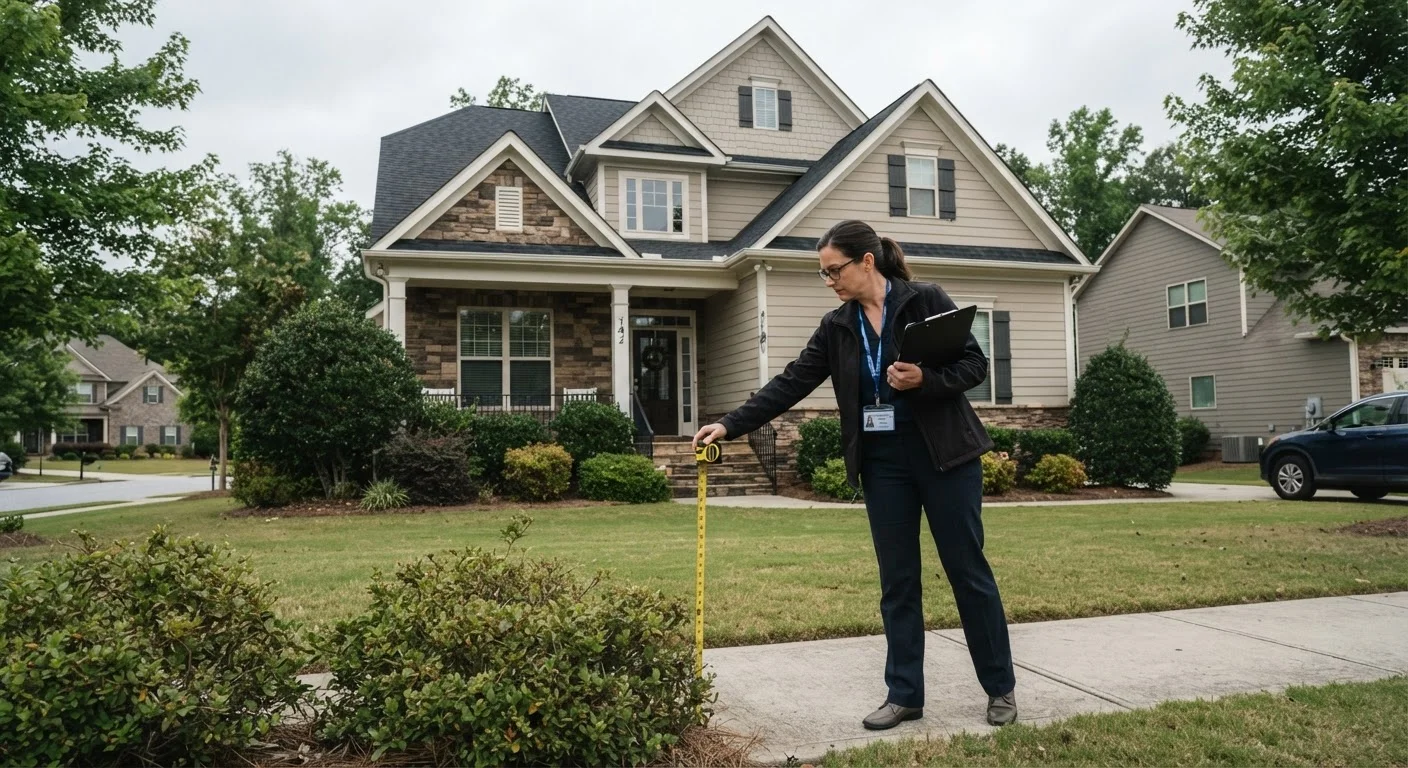
How Lenders Use the Appraisal to Set Loan Limits
When you apply for a mortgage, your lender needs assurance that the home you're buying is worth at least as much as the loan they're providing. That's where the appraisal comes in. The lender uses the lower of the purchase price or appraised value to calculate how much it will lend - a concept central to understanding your loan-to-value ratio (LTV).
For example, if you agree to buy a home for $400,000 and your lender approves you for a loan covering 90% of the purchase price, you'd expect to borrow $360,000. But if the appraisal comes in at $380,000, the lender now bases its calculation on that figure - meaning it will lend up to 90% of $380,000, or $342,000. The gap between that and the agreed price becomes your problem to solve.
This dynamic is why mortgage pre-approval doesn't guarantee final loan terms. A pre-approval reflects your creditworthiness, not the verified value of any specific property.
~8%
Share of closed sales with appraisal issues
According to National Association of Realtors survey data, appraisal problems - including low values - have consistently accounted for a notable share of delayed or canceled transactions in recent years.
$300-$450
Typical appraisal cost for a single-family home
The Appraisal Institute notes that fees vary by region, property type, and complexity, and are generally paid by the buyer regardless of whether the deal closes.
What Appraisers Actually Look At
Licensed appraisers evaluate several factors when determining a property's market value. Understanding what they assess helps buyers recognize which property features genuinely affect value and which are largely cosmetic.
- Comparable sales (comps): Recent sales of similar homes in the same neighborhood form the backbone of most appraisals. Appraisers typically look for comps within the past six months and within a one-mile radius when possible.
- Property condition: Structural issues, roof age, HVAC systems, and major deferred maintenance can all reduce an appraised value. Minor cosmetic issues typically have less impact.
- Square footage and layout: Gross living area, bedroom and bathroom count, garage, and lot size are all measured and documented.
- Location factors: Proximity to schools, traffic noise, flood zones, and neighborhood trends all influence value.
The appraiser's report will detail these factors and show how each comp was adjusted up or down to reflect differences from the subject property.
When the Appraisal Comes In Low: Your Options
A low appraisal is stressful, but it isn't necessarily a dead end. Buyers and sellers each have practical paths forward.
Renegotiate the purchase price
The most straightforward resolution is asking the seller to lower the price to match the appraised value. Sellers who are motivated - or who recognize that a different buyer's lender will likely reach the same conclusion - may agree. This protects you from overpaying relative to what the broader market supports.
Cover the gap in cash
If you have additional savings and believe the property is worth the agreed price, you can make up the difference between the lender's ceiling and the purchase price out of pocket. This increases your effective down payment. Before going this route, consider whether it leaves you with adequate reserves for closing costs and emergencies.
Request a reconsideration of value
If you or your agent believe the appraiser overlooked relevant comparable sales or made factual errors about the property, your lender can submit a formal reconsideration of value request on your behalf. This isn't a guarantee of a revised number, but it is a legitimate process when there's specific, documented evidence to support your case.
Walk away with your contingency intact
If your purchase contract includes an appraisal contingency, you have the right to exit the deal without losing your earnest money deposit when the home doesn't appraise at the purchase price. Waiving contingencies is one of the ways buyers can expose themselves to financial risk in competitive markets - know what you're agreeing to before you sign.
Check the Appraisal Report for Errors
When you receive a copy of the appraisal report (lenders are required to share it with you), review it carefully for factual mistakes - incorrect square footage, wrong bedroom count, or missing improvements. Even minor errors can affect the final value conclusion, and correcting them is one of the few ways to legitimately challenge a low number.
Appraisals and Refinancing
Appraisals aren't exclusive to home purchases. When you refinance a mortgage, your lender will typically order a new appraisal to confirm the current market value of your home. This matters because the amount of equity you've built - driven by both principal paydown and appreciation - determines how favorable your new loan terms can be.
A home that has appreciated significantly since purchase makes refinancing more attractive. Conversely, if local values have declined, a low refinance appraisal can limit your options or affect whether you qualify for certain loan types at all.
This article is for general informational and educational purposes only and does not constitute financial, legal, or mortgage advice. Consult a licensed mortgage professional or real estate attorney for guidance specific to your situation.
Frequently Asked Questions
The lender orders the appraisal, but the buyer typically pays for it - often as part of closing costs or upfront before closing. The appraiser is selected independently to avoid conflicts of interest, a requirement solidified by federal regulations after the 2008 housing crisis.
The physical inspection usually takes between 30 minutes and a few hours depending on the property's size. The full written report is typically delivered to the lender within a week to ten days of the inspection.
No. Lenders require an independent appraiser selected through an approved process to ensure neutrality. However, you may choose to hire a separate appraiser independently before making an offer to better understand a property's value.
If your purchase contract includes an appraisal contingency - a clause that allows you to back out if the home doesn't appraise at the purchase price - your earnest money deposit is generally refundable. Always confirm the specific terms with your real estate attorney or agent.
No. The appraised value is determined by comparable sales data and property condition, not by what a buyer agreed to pay. A seller accepting a higher offer doesn't influence what the appraiser concludes.
Yes. You can submit a formal reconsideration of value request to the lender, providing factual data such as comparable sales the appraiser may have overlooked or errors in the property description. The lender forwards this to the appraiser for review, though outcomes vary.
The content on this site is for informational purposes only and is not a substitute for professional advice. Always consult a qualified professional for guidance specific to your situation.