

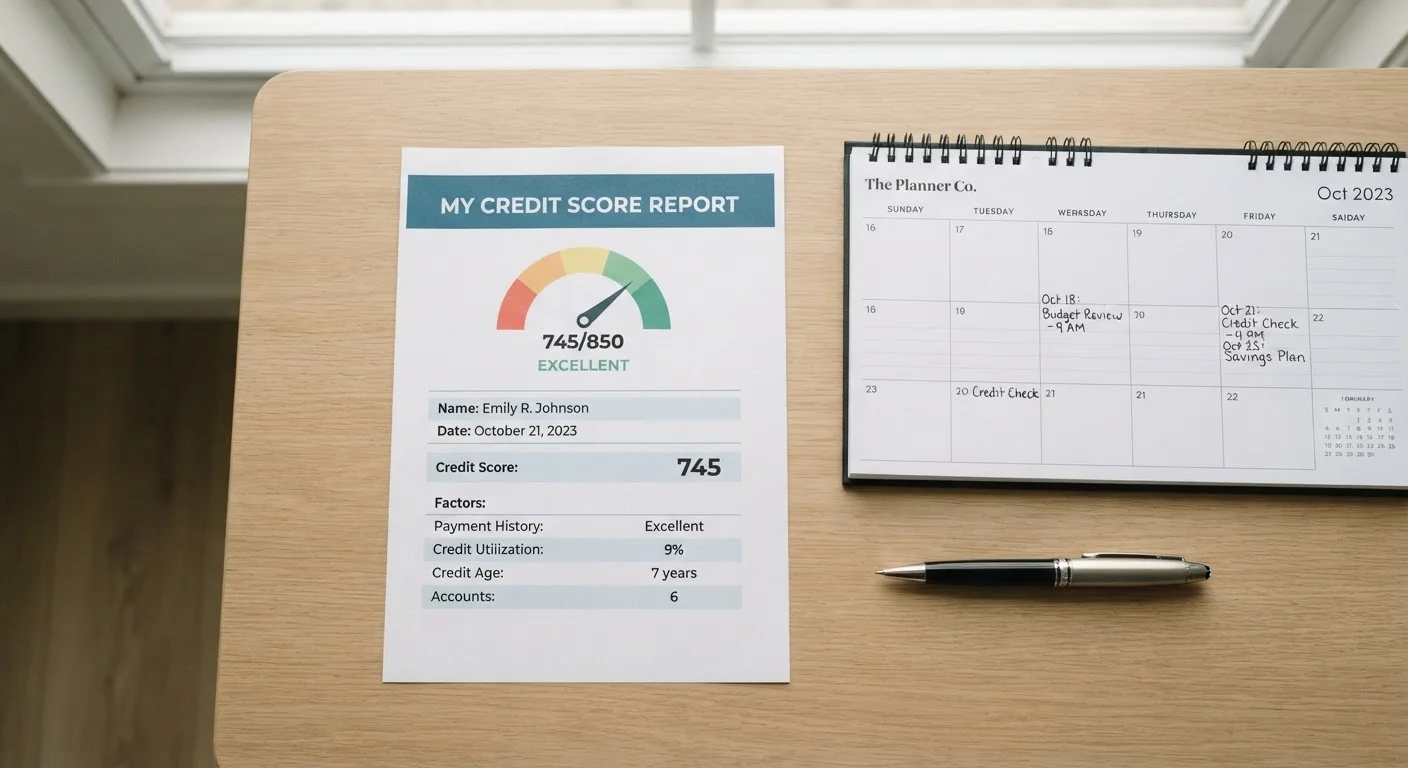
Why Credit Habits Matter More Than Credit Events
A strong credit profile isn't typically the result of a single smart move - it's the accumulated output of repeated behaviors over months and years. Scoring models are designed to reflect patterns, not moments. That means the same principles that help a score hold steady at 780 are the same ones that move a score from 620 to 700: consistency, low utilization, and account stability.
Understanding what credit scores actually measure is the first step. Most major scoring models evaluate five broad areas: payment history, amounts owed (including utilization), length of credit history, credit mix, and new credit inquiries. Each carries a different weight, but none operates in isolation. The goal of good credit habits is to keep all five areas working in your favor simultaneously.
Scoring Models Vary by Lender
FICO and VantageScore are the two most widely referenced credit scoring models, but lenders may use different versions or even proprietary models. The factors that influence your score are broadly similar across models, but the exact weightings can differ. Focus on the underlying behaviors - timely payments, low utilization, account stability - rather than optimizing for one specific score version.
The Core Practices That Move the Needle
The behaviors below aren't shortcuts - they're the mechanics that consistently support a healthy credit profile over time. They apply whether you're starting with a thin file or working to recover from past challenges.
Pay every bill on time, every month - even the minimum.
Payment history typically carries the most weight in major credit scoring models, often accounting for roughly 35% of a FICO score. A single missed payment can remain on your report for up to seven years. Consistent on-time payments signal reliability to lenders over time.
Keep your credit utilization ratio below 30% - and lower when possible.
Utilization - how much of your available revolving credit you're actually using - is among the most responsive factors in scoring models. High utilization can drag a score down quickly, and reducing it can produce measurable improvement within a billing cycle. It's a ratio, not just a dollar amount, so both your balance and your total limit matter.
Avoid closing old accounts you no longer actively use.
The age of your oldest account, your newest account, and the average age of all accounts together contribute to your credit history length. Closing a long-standing account shortens your average account age and may reduce your total available credit - both of which can lower your score.
Be selective about applying for new credit.
Each time a lender pulls your credit for an application, it typically generates a hard inquiry that can temporarily dip your score by a few points. Multiple applications in a short window can signal financial stress to lenders. Spacing out applications and only seeking credit when genuinely needed limits this exposure.
Review your credit reports from all three bureaus at least once a year.
Errors on credit reports - such as accounts that don't belong to you, incorrectly reported late payments, or outdated balances - are more common than many consumers realize. Under federal law, you can dispute inaccurate information, and corrections can improve your score. Regular review also helps you spot potential identity theft early.
For a broader look at how credit card debt differs from other borrowing, understanding revolving balances and utilization becomes especially relevant.
Putting It Into Practice: Starting Points for Today
Knowing the principles is only half the equation - the other half is translating them into actions that fit your actual routine. The quick wins below are designed to reduce friction and get you moving on the factors most likely to affect your score in the near term.
Pairing these actions with sound money management makes them more durable. Explore core budgeting strategies and automating savings thoughtfully to build a fuller financial foundation around your credit habits.
Autopay and Budgeting Work Well Together
Automating minimum payments protects your payment history, but it works best when paired with a broader budgeting habit. Knowing what's scheduled to leave your account each month helps prevent overdrafts and keeps your financial picture clear. See how budgeting habits that stick can complement your credit strategy.
This article is for general informational and educational purposes only and does not constitute personalized financial or legal advice. Credit scoring models and reporting practices can vary. Consult a qualified financial professional for guidance specific to your situation.
The content on this site is for informational purposes only and is not a substitute for professional advice. Always consult a qualified professional for guidance specific to your situation.