

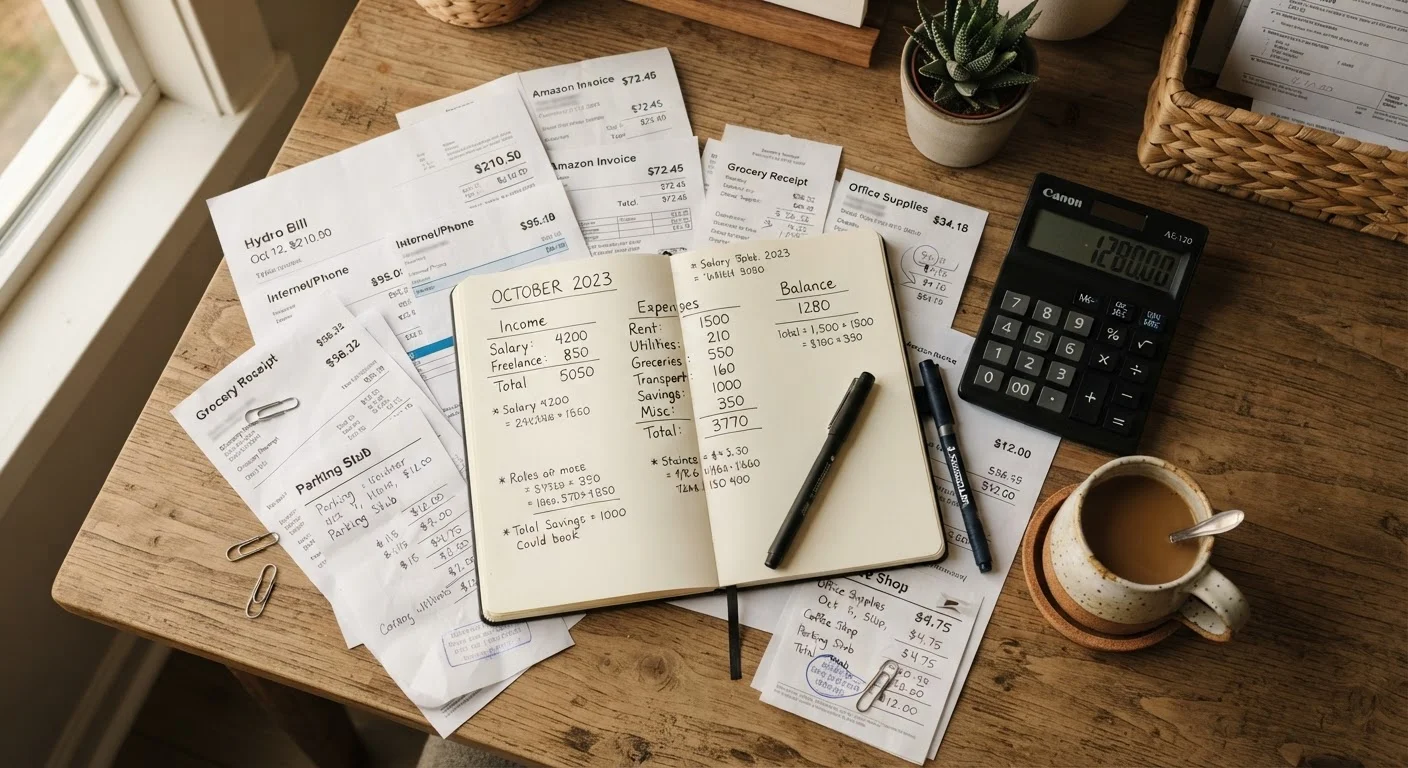
Why Standard Budgeting Advice Falls Short for Variable Earners
Most budgeting advice assumes a predictable, regular paycheck. The instruction to "take your monthly income, subtract your expenses, and save the rest" works neatly when income is fixed - but falls apart when one month brings $2,400 and the next brings $5,800.
Freelancers, gig workers, seasonal employees, and commission-based earners all face this reality. The core challenge isn't overspending - it's that standard budgeting math uses a denominator (monthly income) that keeps changing. The solution isn't to budget harder using the same framework. It's to use a framework built for variability from the start.
This Is General Financial Information
The strategies in this article are educational frameworks, not personalized financial advice. Every financial situation is different. For decisions specific to your circumstances - especially around taxes, savings goals, or debt - consult a licensed financial professional.
The steps below replace the fixed-income assumption with a system that works regardless of which direction your income moves in a given month. It centers on three pillars: a conservative income baseline, a tiered expense list, and a buffer that absorbs the swings.
What You'll Need Before You Start
Before working through the steps, gather your materials and tools.
What you will need
Spreadsheet or budgeting app
Track monthly income and expenses, and model different income scenarios.
Dedicated buffer account
Hold income before distributing it to yourself as a consistent monthly "paycheck."
12 months of income records
Calculate a reliable baseline income figure from your actual earning history.
If you haven't yet built a foundational monthly budget, it may help to read through the first monthly budget walkthrough before applying the variable-income layer described here.
Step-by-Step: Building a Budget Around Variable Income
Follow these steps in order. Each one builds on the last, so skipping ahead - especially past the baseline calculation - tends to undermine the whole system.
Calculate your income baseline
Pull your income records for the past 6-12 months. Add them up and divide by the number of months covered. That's your average. Now identify your three or four lowest-earning months. Your baseline - the figure you'll actually budget from - should sit at or slightly below those low months, not at your average.
This conservative anchor protects you in slow stretches. If you earn more than the baseline in a given month, that surplus becomes a buffer rather than a spending invitation.
List and rank your expenses by priority
Write out every monthly expense and assign it a priority tier:
- Tier 1 - Non-negotiables: Rent or mortgage, utilities, insurance, minimum debt payments, groceries
- Tier 2 - Important but adjustable: Phone, internet, transportation, childcare
- Tier 3 - Discretionary: Dining out, subscriptions, entertainment, clothing
This hierarchy tells you exactly what gets funded first when income dips. Understanding the difference between fixed and variable costs is crucial here - see how fixed and variable expenses differ for a deeper breakdown.
Build an income buffer fund
An income buffer is separate from your emergency fund. Its specific job is to cover the gap during below-baseline months. A practical target is one to two months' worth of Tier 1 and Tier 2 expenses held in a liquid account you don't touch for day-to-day spending.
Contribute to it during high-income months. When a slow month hits, draw from the buffer to top up your self-assigned "paycheck" to the baseline amount rather than scrambling or going into debt.
Pay yourself a consistent monthly amount
When income lands - whether from clients, gig platforms, or seasonal work - deposit it into your buffer account first. Then, on a set date each month, transfer your baseline amount to the account you pay bills from. This mimics a regular paycheck and makes budgeting dramatically more predictable.
Everything above the baseline in the buffer stays put until it reaches your target balance. After that, you can decide how to allocate surpluses: additional savings, debt paydown, or discretionary spending. If you're new to the mechanics of structuring a monthly budget this way, the first monthly budget guide walks through the core framework.
Account for taxes and self-employment costs
If you're a freelancer or independent contractor, taxes are not withheld from your pay. A common approach is to set aside a percentage of every dollar earned - into a dedicated tax savings account - before that money is counted as spendable income. The right percentage depends on your income level, deductions, and state of residence; consult a tax professional to determine what's appropriate for your situation.
Also factor in any business expenses (software, tools, professional fees) that come out of your earnings before you can pay personal bills.
Review and recalibrate monthly
At the end of each month, compare actual income against the baseline and actual spending against your plan. If you've had three or more consecutive months significantly above or below baseline, recalculate. Your income pattern may have shifted and your budget should reflect that reality.
Also revisit spending categories you may have underestimated - easily overlooked budget categories like medical co-pays, gifts, and car maintenance are common culprits that erode even a well-designed plan.
Don't Budget From Your Best Month
It's tempting to plan spending based on a strong income month, but that sets you up for shortfalls the rest of the year. Always anchor your baseline budget to a conservatively low income estimate. Surpluses are far easier to manage than deficits.
Staying Consistent When Income Fluctuates
The mechanics above will only hold if you revisit and maintain them regularly. One of the most effective habits for variable-income budgeters is a short monthly check-in - not just to track numbers, but to confirm that your baseline still reflects current reality.
Review Your Budget Every Single Month
With variable income, a once-a-year budget review isn't enough. Set aside 20-30 minutes at the end of each month to compare what came in against what went out, then adjust the next month's plan accordingly. The monthly budget audit checklist can make this routine faster and more consistent.
The other key habit is protecting your buffer aggressively. When a strong month arrives, the instinct is to upgrade spending across the board. Resist that until the buffer is fully funded. Lifestyle expansion is easier to sustain when it's funded by consistent surplus, not a single good month.
For additional strategies on maintaining a budget over time, budgeting habits that actually work covers the practical routines that help people stay consistent long-term.
This article is for general informational and educational purposes only and does not constitute personalized financial, tax, or legal advice. Consult a qualified financial professional before making decisions specific to your situation.
The content on this site is for informational purposes only and is not a substitute for professional advice. Always consult a qualified professional for guidance specific to your situation.