

Why Myths Are the Biggest Obstacle
Most people who have never built a budget haven't failed at it - they've talked themselves out of trying. The barrier isn't math ability, income level, or time. It's a cluster of persistent myths that make budgeting sound harder, more restrictive, or less relevant than it actually is.
This article addresses the most common ones head-on. Each myth below is followed by the accurate picture and a plain explanation of why the misconception took hold. Once these ideas are cleared away, there's very little standing between you and a working plan. For a full walkthrough on actually building one, see our step-by-step guide to your first monthly budget.
Myth
Budgets are only for people who are in debt or can't make ends meet.
Fact
A budget is useful at any income level - it's a planning tool, not a crisis management tool.
This is probably the most common reason people with stable finances skip budgeting entirely. The logic goes: if the bills are paid and there's money left over, there's nothing to manage. But budgeting isn't about survival - it's about intention. Without a plan, even comfortable incomes can quietly drain toward low-priority spending while high-priority goals like an emergency fund, retirement contributions, or a home down payment go underfunded.
Myth
You need a spreadsheet or special app to budget properly.
Fact
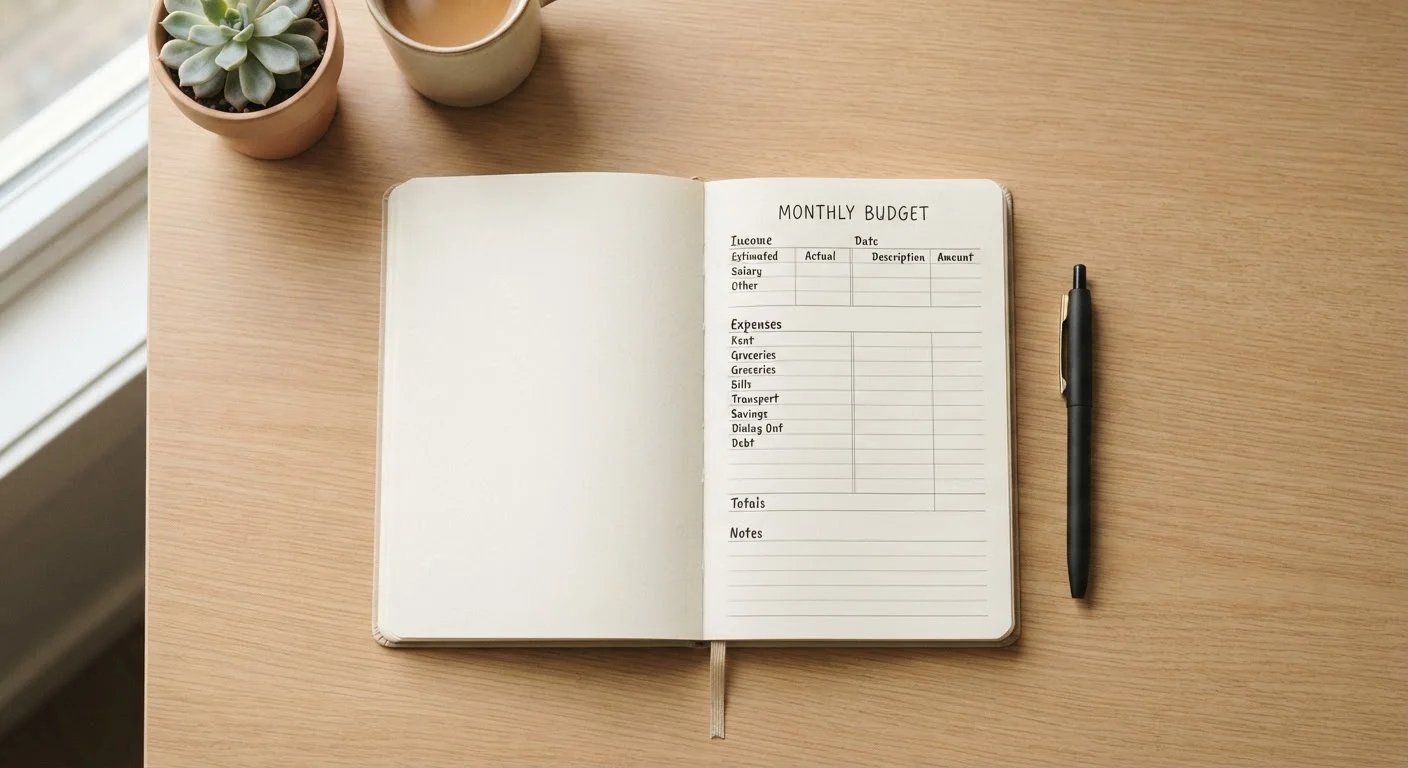
A pen, a piece of paper, and 30-60 minutes are all that's required to build a functional budget.
Technology can make budgeting easier to maintain over time, but it's not the starting point. Apps and spreadsheets become useful after you understand your own cash flow - not before. Starting with a simple written list of monthly take-home income and known expenses reveals the essential structure immediately. The format matters far less than the habit of looking at the numbers regularly. Our complete beginner's budgeting resource walks through this from the ground up.
Myth
Budgeting means never spending money on things you enjoy.
Fact
A well-built budget includes discretionary spending - it just makes that spending deliberate rather than accidental.
The deprivation image of budgeting is one of the biggest deterrents, and it's based on a misunderstanding of what a budget does. Telling yourself you can never eat out, travel, or spend on hobbies is a restriction you've invented - the budget itself doesn't require it. What a budget does require is that you decide in advance how much to allocate to those things. Planned spending on enjoyment is entirely consistent with a healthy budget. Unplanned spending on everything is what creates problems.
Myth
If you go over budget once, the whole system has failed.
Fact
One overspent category in one month is normal data, not a sign the budget is broken.
Perfectionism is one of the leading reasons budgets are abandoned. An unexpected car repair, a birthday dinner, a higher-than-expected utility bill - these are not budget failures, they're the reality a budget is supposed to help you navigate. The correct response to going over in one area is to note it, adjust another category if needed, and continue. Budgets that last are built on iteration, not on flawless execution. For a deeper look at why plans tend to collapse around the second month, see why budgets fail in month two.
Myth
Irregular income makes budgeting impossible.
Fact
Variable income requires a slightly different approach, but budgeting is more useful - not less - when income fluctuates.
Freelancers, gig workers, and people paid on commission often feel that a budget doesn't apply to them because the numbers change month to month. In reality, income variability is exactly the condition under which a spending plan provides the most protection. Common adaptations include budgeting from a conservative baseline (using a lower estimate of expected income), building a buffer account to smooth out lean months, and prioritising fixed essential expenses first before allocating to discretionary categories.
What a Budget Actually Does for You
A budget is fundamentally an information tool. It tells you where your money is going before circumstances force you to notice. That awareness - not restriction - is the core value. People who budget consistently tend to make more deliberate tradeoffs: they choose to spend on what matters and cut back on what doesn't, rather than discovering at month's end that the money is simply gone.
~32%
Americans with a detailed household budget
Gallup polling has consistently found that fewer than one-third of American households maintain a detailed monthly budget, despite widespread acknowledgment that budgeting is beneficial.
Under 1 hour
Time needed to draft a basic monthly budget
Consumer finance educators broadly agree that a functional first budget - listing income, fixed expenses, and spending categories - can be completed in a single focused session.
No budget survives first contact with real life perfectly intact. Irregular expenses appear, income fluctuates, priorities shift. The point isn't a flawless plan - it's a reference point you can return to and adjust. Our guide on habits that make a budget stick covers the practical routines that keep plans from unraveling after the first few weeks. And if you want to compare structured approaches like zero-based budgeting or the 50/30/20 rule, our budgeting approaches comparison lays out how each one works.
Don't Confuse a Budget With a Restriction
Framing a budget as a list of things you're not allowed to do is one of the fastest ways to abandon it. A budget is a spending plan - it describes what you choose to do with your money, including enjoyment. Setting the frame correctly from the start makes the habit far easier to maintain. If your budget feels punishing rather than clarifying, that's usually a sign the categories need adjustment, not that budgeting itself is the wrong approach.
This article is for general informational and educational purposes only. It does not constitute personalised financial advice. For guidance tailored to your specific financial situation, consult a qualified financial professional.
The content on this site is for informational purposes only and is not a substitute for professional advice. Always consult a qualified professional for guidance specific to your situation.