

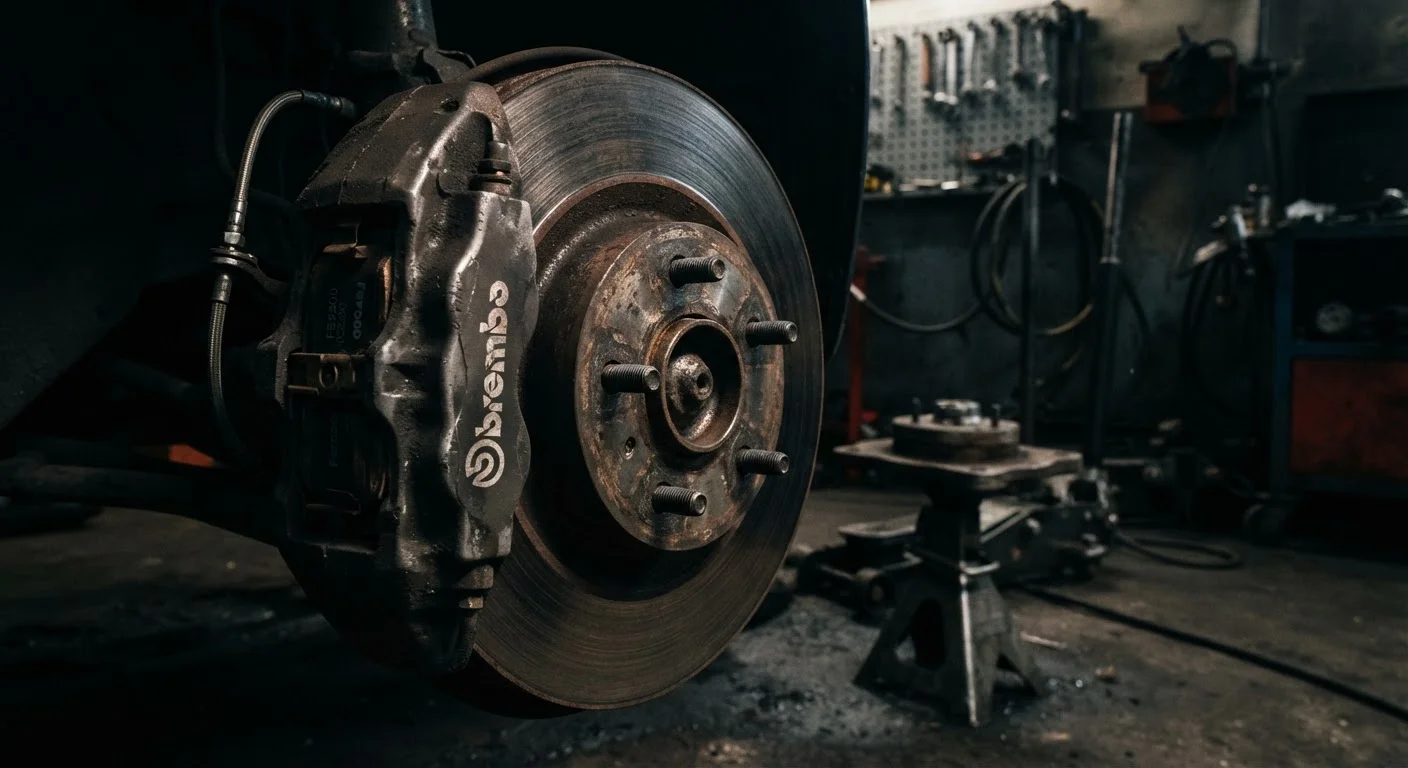
The Most Common Reasons Brakes Squeal
Not every brake squeal means your car is in crisis - but understanding what's behind the noise helps you respond appropriately rather than guess.
Worn brake pad wear indicators
Most modern brake pads include a small metal tab called a wear indicator. When the pad wears down to a certain thickness, this tab contacts the rotor and produces a deliberate high-pitched squeal. It's an engineered warning, not an accident. If you hear this sound consistently when braking, your pads are likely due for replacement.
Glazed rotors or pads
If brakes get overheated - from extended hard braking or habits like riding the brakes downhill - the pad and rotor surfaces can harden and develop a glaze. Glazed surfaces don't grip each other as efficiently, and the resulting vibration creates noise. A mechanic can assess whether resurfacing or replacement is needed.
Dust, debris, or light rust
A fine layer of rust on rotors from overnight moisture typically causes a brief squeal on your first few stops of the day - this is normal and usually clears up on its own. Brake dust or small debris caught between pad and rotor can also cause intermittent noise without indicating a deeper problem.
Brake pad composition
Semi-metallic brake pads, which are common on many vehicles, are more prone to noise than organic or ceramic formulations - especially in cold temperatures. If your brakes were recently serviced and squeal has followed, the pad type may be a factor worth discussing with your mechanic.
When In Doubt, Get It Checked
Most reputable repair shops will inspect your brakes without charge as part of a general vehicle check. If you're uncertain whether your brake noise is serious, getting a professional set of eyes on it is the safest and often cheapest first step. Early detection of worn pads typically costs far less than rotor replacement down the line.
Squealing vs. Grinding: Knowing the Difference
Both noises deserve attention, but they suggest different levels of urgency.
Squealing is a high-pitched tone typically heard during or just before full brake application. It's often an early warning - your braking system still has functional material remaining, but something needs to be checked.
Grinding is a harsh, scraping sound that usually indicates brake pads have worn through completely, leaving metal components in direct contact with the rotor. This is a more serious situation. Continued driving with grinding brakes can damage the rotor itself and significantly reduce stopping ability.
Brake Performance Is a Safety Issue
This article is for general informational purposes and is not a substitute for professional mechanical advice. Brake systems are safety-critical components. If you have any doubt about your vehicle's braking performance, consult a licensed mechanic before continuing to drive. Do not attempt brake repairs without proper training, tools, and safety precautions.
If you notice any change in how your car stops - longer stopping distances, pulling to one side, or a pulsing sensation in the brake pedal - treat that as a higher-priority issue regardless of the accompanying sound.
What You Should Actually Do
Here's a practical, no-panic approach to handling brake noise:
- Notice the pattern. Does the squeal happen only in the morning and disappear quickly? That's likely surface rust. Does it happen every time you brake, or is it getting louder? That warrants a mechanic visit.
- Check your brake pad thickness if possible. On many vehicles, you can see the brake pad through the wheel spokes. If the pad material looks very thin - less than a quarter inch - it's time to get them replaced.
- Don't ignore persistent noise. Brakes that squeal consistently under normal conditions should be inspected. Most shops will examine brakes as part of a routine service check, and catching wear early typically prevents costlier repairs later.
- See a licensed mechanic. Brake systems are safety-critical. Unless you have direct experience with brake service, diagnosis and repair should be left to a qualified professional. Never attempt brake work without proper knowledge and tools.
~$150-$300
Typical brake pad replacement cost per axle
General industry estimates for parts and labor vary significantly by vehicle make, region, and shop - always get a written quote.
70,000 miles
Average brake pad lifespan under normal driving
Actual pad life varies widely based on driving habits, vehicle weight, and pad material; city driving with frequent stops shortens pad life considerably.
Frequently Asked Questions
It depends on the cause and severity. Occasional squealing after rain or on a cold morning is typically harmless. Consistent squealing under normal conditions, especially paired with reduced braking performance or pulling, means you should schedule a brake inspection promptly and avoid aggressive driving in the meantime.
Overnight moisture creates a thin layer of rust on the rotor surface. When you first apply the brakes, this layer causes a brief squeal or squeak that disappears after a few stops. This is a normal occurrence and not a cause for concern unless the noise persists throughout your drive.
Costs vary widely depending on what's causing the noise, your vehicle type, and your location. Brake pad replacement is generally one of the more affordable brake services; rotor resurfacing or replacement adds to the cost. Get a written estimate from a licensed mechanic before authorizing any work.
Yes. New brake pads often have a brief break-in period during which light squealing is normal. Some pad formulations - particularly semi-metallic pads - are also more prone to noise. If squealing from new pads persists beyond the first week or so of normal use, have them checked.
Squealing is a high-pitched sound and often indicates worn pads or surface conditions. Grinding is a harsh, metal-on-metal sound that typically means brake pads are fully worn through. Grinding requires immediate attention, as continued driving can damage rotors and compromise braking effectiveness.
The content on this site is for informational purposes only and is not a substitute for professional advice. Always consult a qualified professional for guidance specific to your situation.